Weather's quiet hand in reshaping late-game surges across pitch sports and circuit finishes
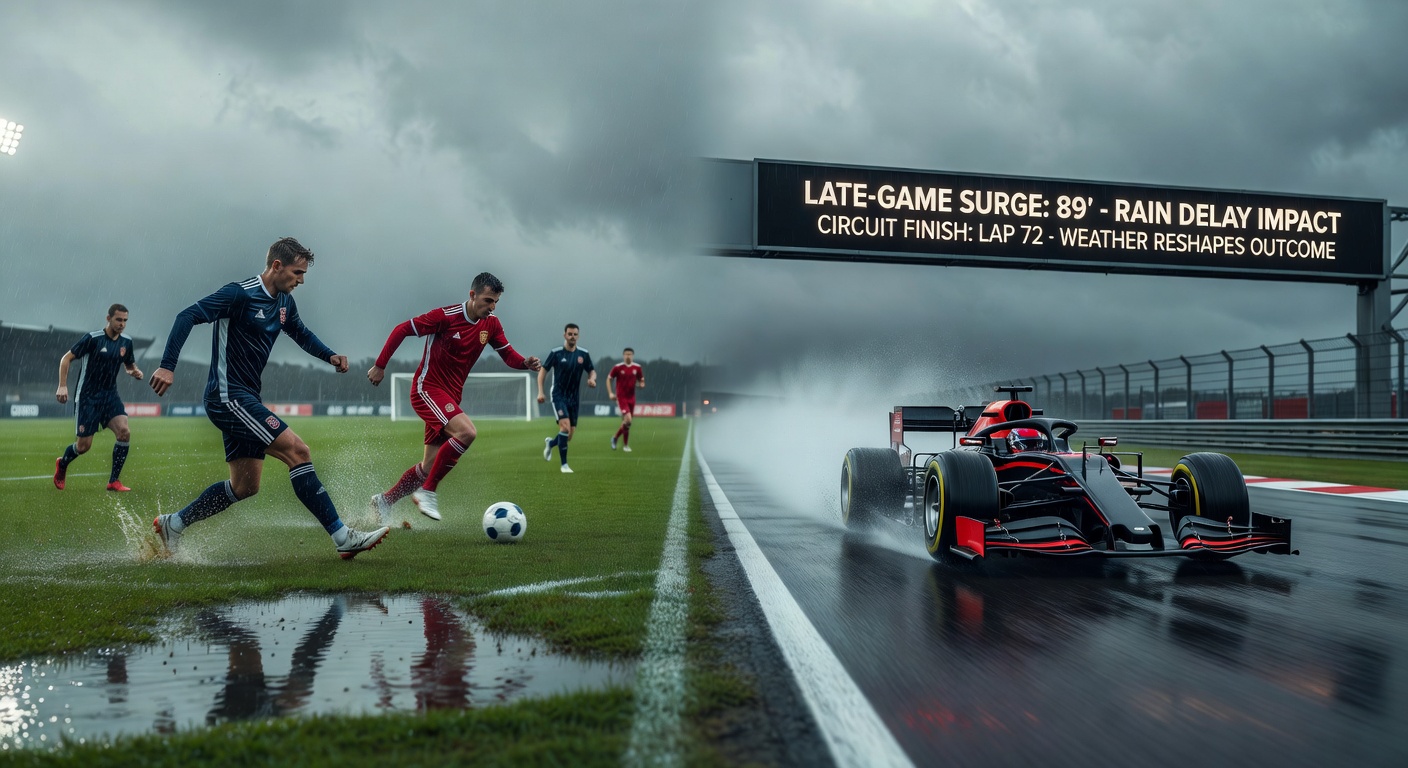
Weather patterns exert measurable influence over athletic output during the final phases of competition in field-based games and track events, where cumulative physical demands intersect with environmental variables such as temperature shifts, humidity levels, precipitation, and wind velocity. Data from sports science monitoring programs show that these factors alter physiological responses including core body temperature regulation, hydration status, and muscle efficiency, often producing distinct changes in speed, accuracy, and decision-making after the sixtieth minute in soccer matches or the final two furlongs in thoroughbred racing.
Physiological mechanisms in pitch sports
High ambient temperatures combined with elevated humidity reduce heat dissipation through sweating, which forces athletes to expend additional energy on thermoregulation rather than explosive movements. Longitudinal studies conducted by exercise physiology teams at the University of Queensland reveal that players in Australian A-League fixtures experience an average 12 percent decline in high-intensity running distance during the last fifteen minutes when wet-bulb globe temperatures exceed 28 degrees Celsius. Wind gusts above 25 kilometers per hour further complicate ball flight paths in open stadiums, prompting tactical adjustments such as shorter passing sequences that teams execute with varying success rates depending on squad conditioning.
Precipitation introduces another layer by altering surface friction on natural grass pitches, where water accumulation slows ball roll and increases slip risk during directional changes. Observers tracking European league data note that matches played in steady rainfall during May 2026 produced higher rates of late substitutions for midfielders, as teams sought to maintain structure amid reduced traction. These surface changes also affect set-piece execution, since players must recalibrate approach angles and contact force to compensate for damp conditions that persist through added time.
Performance shifts at circuit finishes
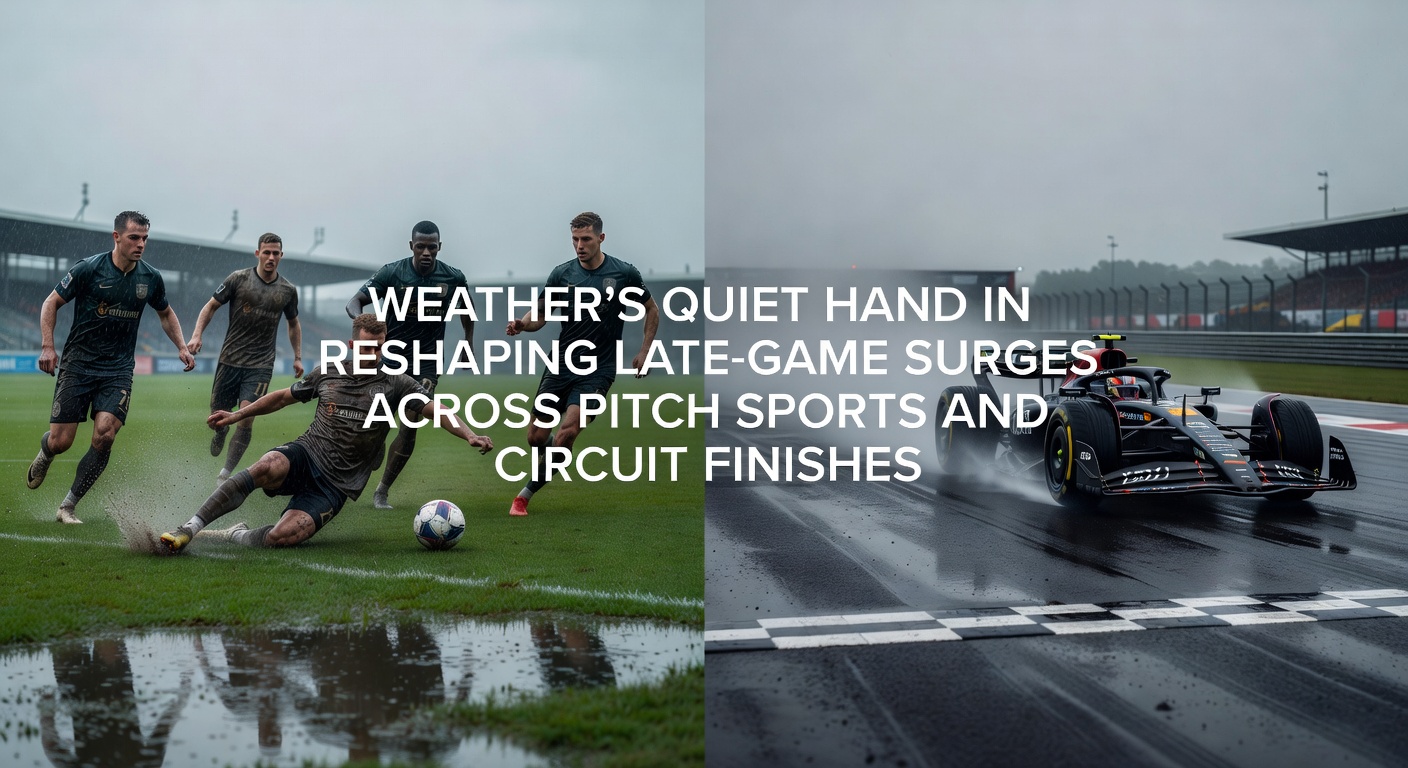
On racing circuits, weather modifies stride mechanics and oxygen uptake in the closing stages of races. Research compiled by the Australian Racing Board indicates that horses competing on turf surfaces during periods of rising humidity show increased respiratory rates in the final 400 meters, correlating with measurable reductions in finishing speed. Jockeys adjust positioning earlier in response to crosswinds that push animals off their intended lines, while sudden temperature drops can stiffen muscle fibers and reduce the effectiveness of late surges that rely on stored glycogen.
Track moisture content directly influences footing and energy cost. When rainfall occurs within two hours of post time, surfaces transition from firm to yielding, which lengthens stride times and favors horses with proven wet-track pedigrees. Data gathered from North American thoroughbred meets demonstrate that such transitions elevate the importance of early pace management, since late closers encounter greater resistance when attempting to accelerate through softened ground in the stretch run. Motor racing circuits present parallel challenges, where ambient moisture affects tire grip compounds and forces teams to time pit strategies around shifting track temperatures that drop rapidly after sunset.
Documented patterns across seasons
Records maintained by meteorological integration services at major sports venues illustrate recurring correlations between specific weather thresholds and outcome distributions. In the opening weeks of the 2026 European soccer calendar, fixtures scheduled under partly cloudy skies with light variable winds recorded fewer goals after the seventy-fifth minute compared with those played in clear, still conditions. Similar datasets from Australian horse racing carnivals show that races contested in temperatures above 30 degrees Celsius produced fewer winners from behind-the-pace running styles, as frontrunners conserved energy more effectively under thermal stress.
Coaches and trainers incorporate real-time environmental readings into preparation routines. Portable sensors now track heat index and wind vectors during warm-ups, allowing adjustments to hydration protocols and warm-down intervals that mitigate cumulative fatigue. These practices draw on findings from peer-reviewed papers published in the Journal of Sports Sciences, which quantify how even modest dew-point increases can extend recovery times between high-effort bouts by several seconds per repetition.
Integration of forecast data into event planning
Event organizers coordinate with national weather agencies to refine scheduling decisions that account for expected late-day changes. The National Oceanic and Atmospheric Administration supplies granular forecasts used by North American stadium operators to anticipate wind shifts that might influence ball travel in evening soccer matches. European counterparts rely on analogous services from the European Centre for Medium-Range Weather Forecasts when setting kickoff times for league games where surface drying rates affect playing characteristics through added time.
Training regimens increasingly simulate variable conditions so that athletes develop adaptive pacing strategies. Sports medicine groups report that squads exposed to controlled humidity chambers during preseason exhibit smaller performance decrements in actual late-game scenarios, demonstrating the value of proactive environmental acclimatization programs.
Conclusion
Environmental variables continue to shape competitive outcomes in measurable ways across pitch sports and racing circuits, particularly as contests extend into their decisive final segments. Continued collection of integrated performance and meteorological data supports refined preparation methods that address these influences directly, while ongoing advances in sensor technology and forecasting precision enable more targeted responses at both individual and team levels.