The Influence of Crowd Support on Home Advantage Metrics in Basketball Arenas and Football Stadiums for Betting Purposes
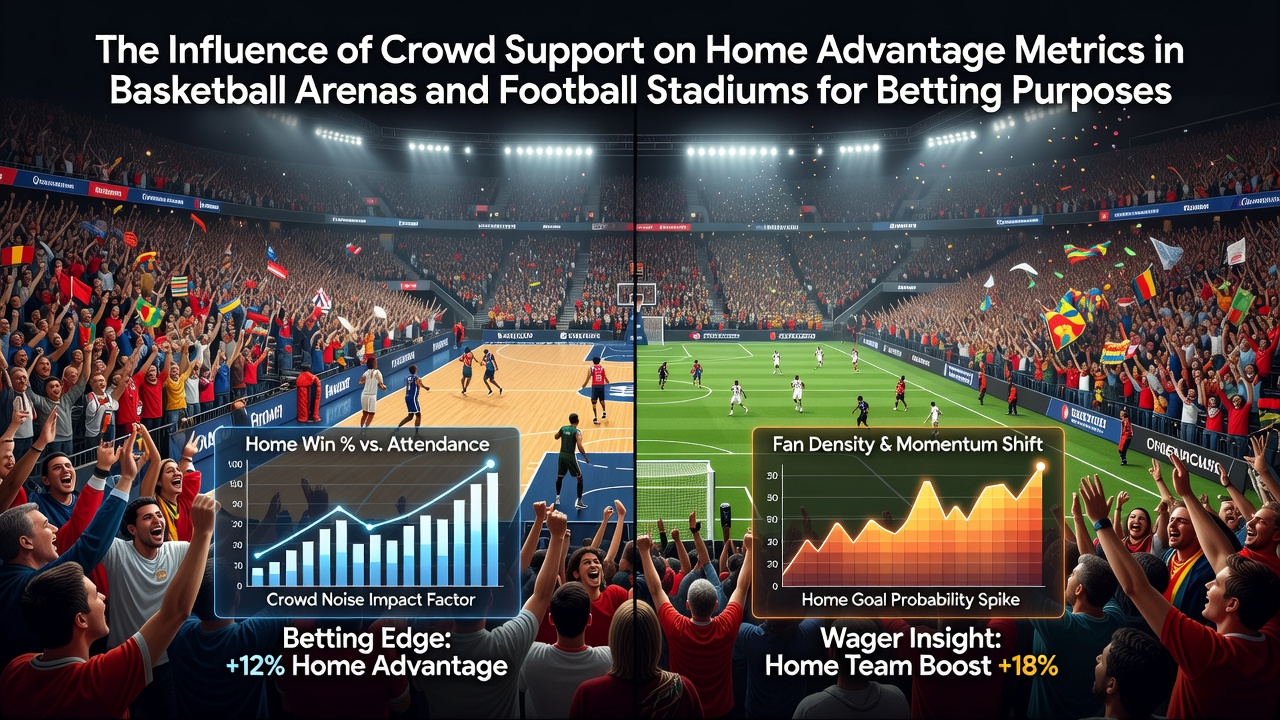
Researchers have tracked home advantage patterns across basketball and football for decades, and crowd support stands out as one measurable factor that shifts win rates, point spreads, and over/under totals in consistent ways. Data from professional leagues shows home teams in the NBA win roughly 58 to 62 percent of regular season games when arena attendance exceeds 90 percent capacity, while similar figures appear in top European football leagues where stadiums reach sell-out levels. These percentages hold steady through multiple seasons even as travel schedules and roster changes fluctuate, which points directly to the role of sustained noise and visual pressure from supporters.
Measuring Crowd Effects on Referee and Player Decisions
Studies that isolate referee behavior find measurable bias toward home sides when decibel levels rise above 85 dB for extended periods. In basketball, officials call fewer traveling violations and charge fouls on the home team during peak crowd moments, while football referees award more stoppage-time minutes and fewer cards to the home side under comparable noise conditions. One analysis of Bundesliga matches between 2018 and 2024 recorded a 12 percent drop in away-team penalties during games with attendance above 40,000 compared with matches played in empty or half-full stadiums. Parallel NBA data collected across the same span shows home teams receive 1.8 additional free-throw attempts per game on average when crowd density climbs past 18,000 spectators.
Player execution metrics also move with crowd intensity. Basketball teams shooting from the free-throw line maintain higher percentages at home venues with strong vocal support, yet away sides experience a documented 3 to 5 percent decline in the same statistic. Football passing accuracy for visiting midfielders drops by similar margins when stadium acoustics amplify chants and jeers, according to tracking data released by league technology partners. These shifts translate into predictable adjustments for betting lines that incorporate historical home margins rather than current form alone.
Betting Market Adjustments and Historical Patterns
Oddsmakers incorporate attendance forecasts and historical crowd-influence coefficients when setting opening lines for both sports. In June 2026, as several NBA playoff series and UEFA Champions League finals approach, early market movement already reflects elevated home margins at venues known for consistent sell-outs. Historical spreads in basketball widen by an average of 1.5 points when home attendance projections exceed 95 percent, while football totals move upward by 0.3 goals in comparable high-density scenarios. Bettors who cross-reference league-supplied attendance reports with these line movements have observed repeatable edges on home-team moneyline wagers and adjusted totals.
Regional Variations Across Leagues and Venues
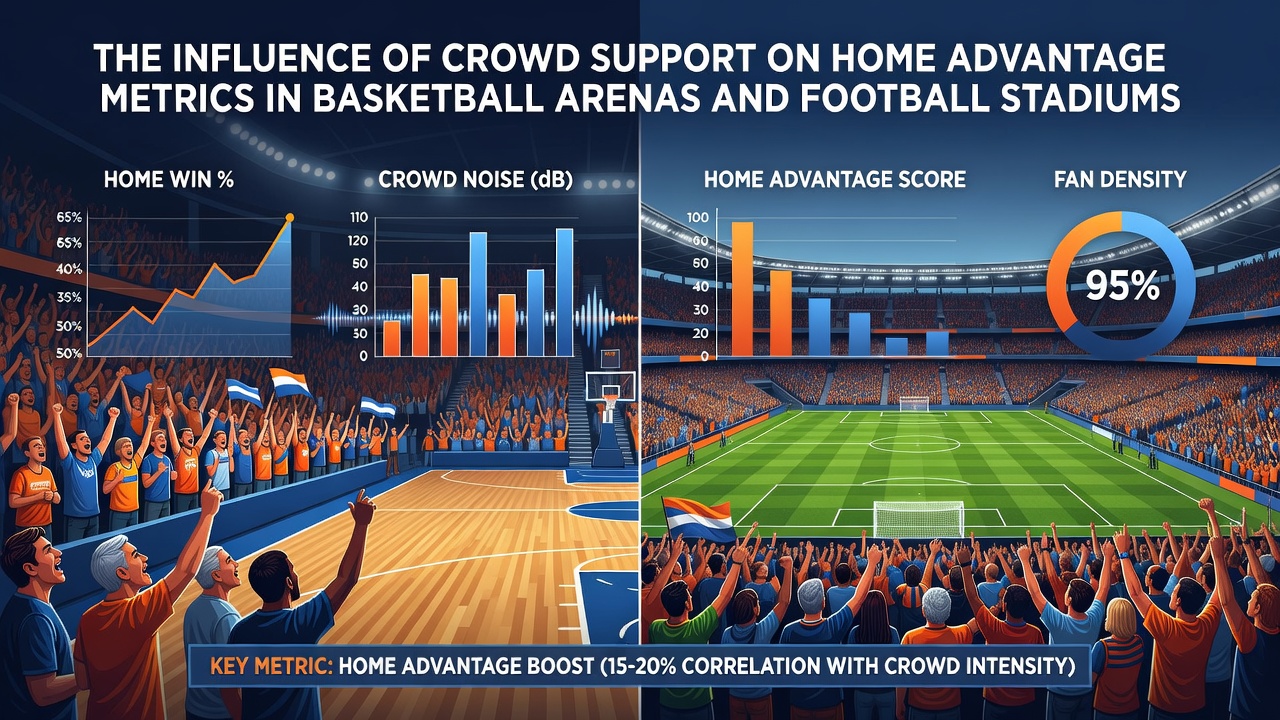
North American basketball arenas produce different crowd-driven variances than European football grounds because of seating configurations and game tempo. NBA venues with lower ceilings and steeper seating angles concentrate sound more effectively, which correlates with larger free-throw differentials. Football stadiums with open corners or multi-tier designs disperse noise differently, resulting in smaller but still detectable shifts in added time and set-piece outcomes. Data compiled by the Australian Institute of Sport across international tournaments shows that teams traveling across multiple time zones experience an additional 4 percent drop in away performance when facing sell-out crowds within 48 hours of arrival.
Canadian regulatory reports on sports wagering note that markets for NBA and soccer events adjust home-advantage coefficients seasonally, with larger corrections applied during high-profile rivalry weeks when ticket demand spikes. European industry analyses released by the German Football Association similarly track how reduced-capacity periods, such as those during the 2020-2021 campaigns, temporarily flattened home win percentages by 7 to 9 points before returning to baseline once full attendance resumed.
Practical Metrics for Line Evaluation
Betting models that weight crowd support typically combine three inputs: average decibel readings recorded at each venue, percentage of season games played at full capacity, and historical referee bias coefficients derived from video review. When these inputs align above established thresholds, home underdogs in basketball produce higher closing-line value than statistical models based solely on offensive and defensive ratings predict. In football, the same alignment often inflates the probability of under 2.5 goals in away-team fixtures because visitor tempo slows measurably under sustained pressure.
League-wide tracking systems introduced in recent seasons supply granular data on player heart-rate variability and movement intensity that further quantify crowd impact. These feeds allow oddsmakers to refine live betting markets after the first quarter or half once actual attendance and noise levels become observable. Observers note that sharp money frequently appears on home sides within minutes of tip-off or kickoff when arena or stadium atmosphere exceeds seasonal norms.
Conclusion
Crowd support influences measurable components of home advantage across both basketball and football, and these components feed directly into betting market construction. Attendance figures, acoustic data, and referee tendency reports provide objective inputs that adjust spreads, totals, and moneylines in patterns repeated across multiple seasons and geographic regions. As the 2026 calendar advances toward major tournaments, updated venue-specific coefficients continue to shape how markets price the home edge when supporters fill arenas and stadiums to capacity.