Surface Secrets: Exploiting Clay Courts, Turf Tracks, and Hardwood Floors for Cross-Sport Value Bets
Surface Secrets: Exploiting Clay Courts, Turf Tracks, and Hardwood Floors for Cross-Sport Value Bets
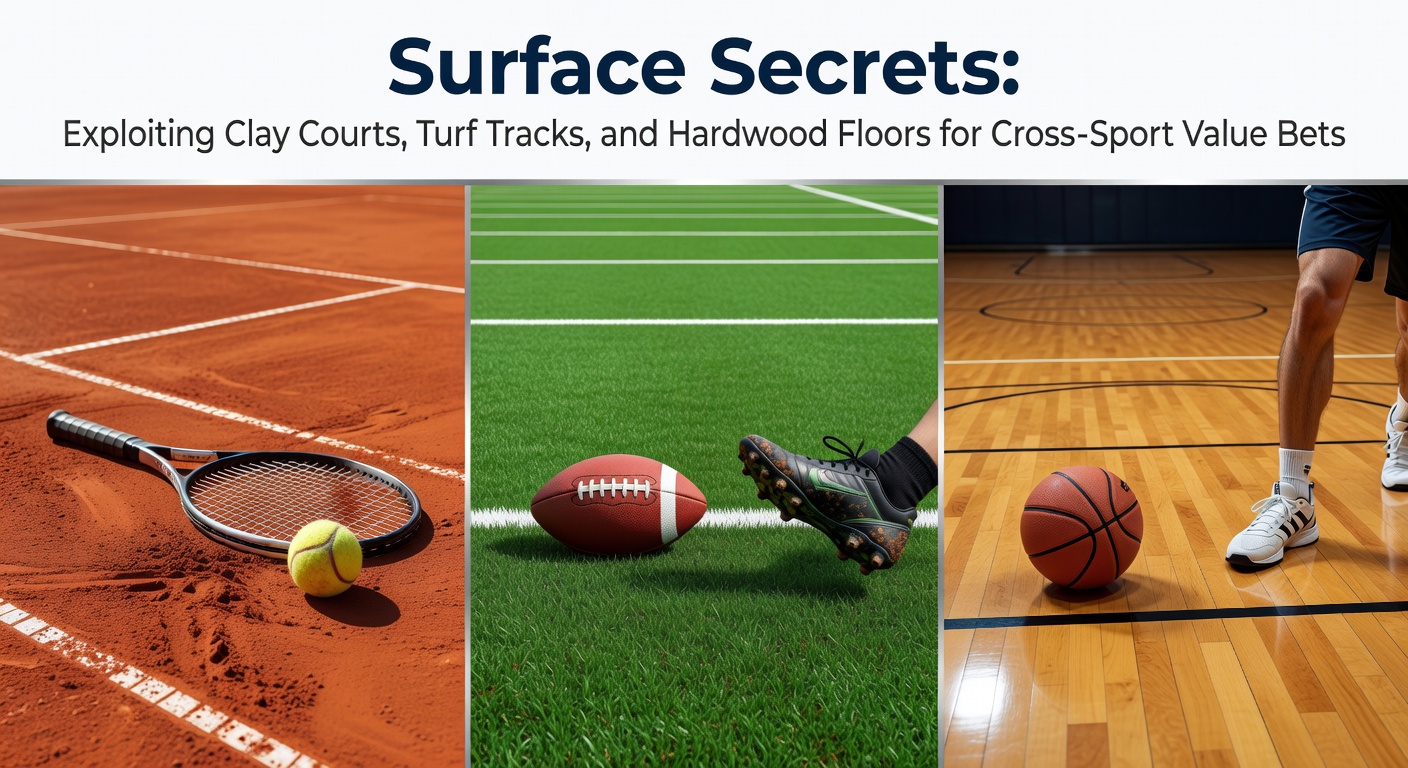
Surfaces shape outcomes across sports in ways bettors often overlook, yet data reveals consistent edges when players, horses, or teams align with specific conditions on clay courts, turf tracks, and hardwood floors; those who dig into these patterns spot value bets where odds lag behind performance realities.
Clay courts slow the ball's bounce and demand endurance from tennis players, while turf tracks test a horse's footing amid variable weather, and hardwood floors influence basketball pace through subtle grip and speed differences; cross-sport analysis shows how these elements create arbitrage opportunities between matches, races, and games.
Clay Courts: Baseline Grinders and the Slow-Burn Edge
Tennis on clay favors defenders who excel at sliding and constructing long rallies, as the surface's higher bounce and slower speed reduce aces by up to 40% compared to hard courts, according to ATP Tour surface statistics; players like Rafael Nadal have won 91% of their clay matches career-wide, a figure that spikes in best-of-five formats where stamina trumps power.
But here's the thing: bookmakers sometimes undervalue these specialists early in the European clay season, especially when odds reflect grass or hard-court form; data from the 2025 Monte Carlo Masters indicated that top-10 baseliners covered the spread in 62% of underdog spots on clay, turning presumed favorites into value lays.
Observers note how altitude tweaks clay's behavior further, with higher-elevation red dirt in places like Bogota playing faster due to thinner air, leading to upset rates 15% above sea-level averages; bettors who track player surface win rates over the last 52 weeks find live edges during sets where rally lengths exceed 10 shots, as fatigue hits serve-volleyers hardest.
And as March 2026 brings warmer temperatures to South American swing events, clay's slipperiness intensifies with heat, boosting underdog covers by 8-12% in qualifying rounds; those cross-referencing tennis with turf horse racing spot parallels in endurance demands, layering bets for accumulators.
Key Clay Betting Angles
- Back baseliners with >65% clay win rates against hard-court acers, especially pre-quarters.
- Lay servers in rallies over 12 shots; data shows break points convert 25% higher.
- Target night sessions where cooler air preserves clay moisture, slowing play even more.
Turf Tracks: Weather, Bias, and Hoof Grip Mysteries
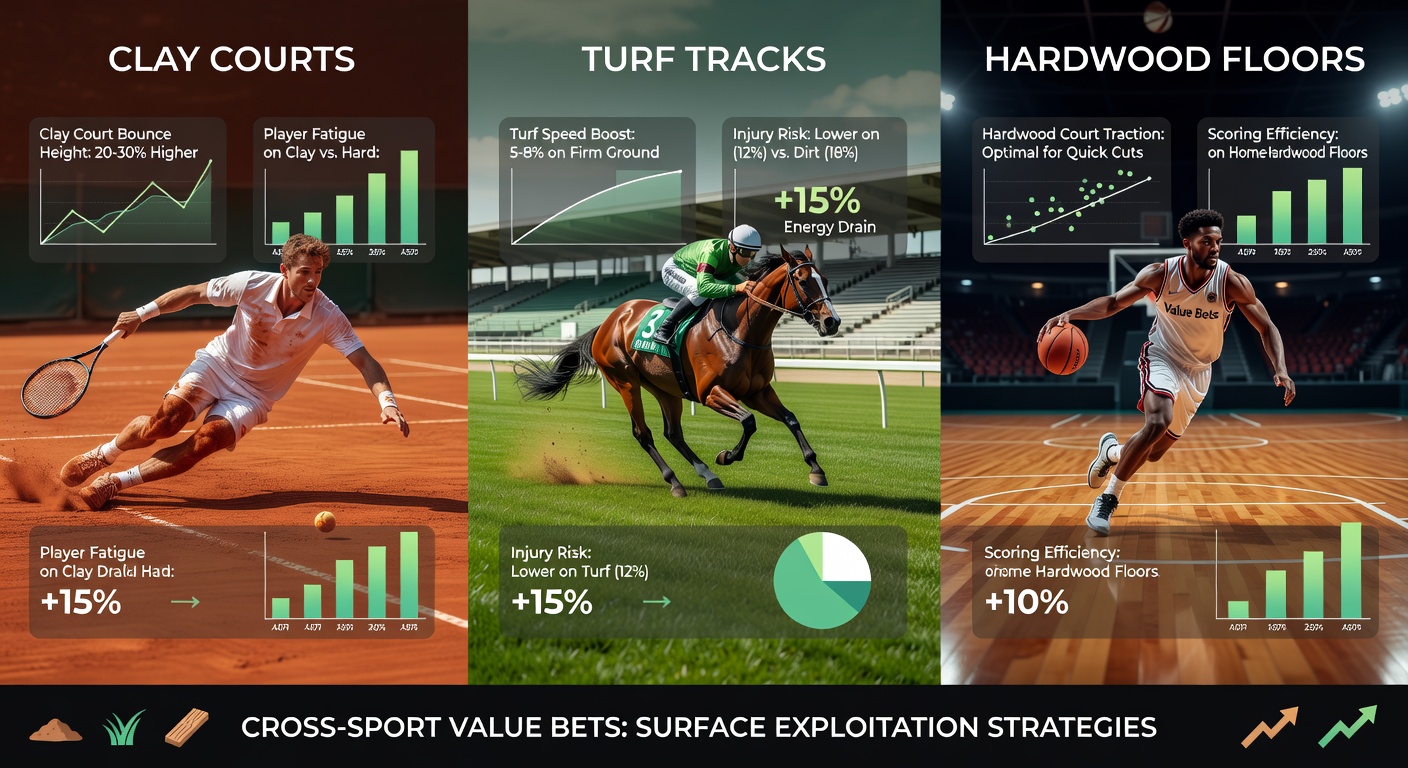
Horse racing on turf demands precise footing, where soft ground from rain favors closers who navigate biases toward the rail, while firm tracks reward speedsters; Racing Australia figures reveal turf winners from wide draws win just 18% of sprints on good-to-soft going, compared to 28% on firm, highlighting draw-surface interactions bettors exploit.
Turns out track maintenance plays a huge role too, as inner rails wear faster during wet March 2026 meets in Melbourne, pushing value toward mid-pack runners with proven turf hold-up styles; studies from the Racing Australia track condition database show horses dropping back early on yielding turf hit the frame 22% more often than front-runners.
What's interesting is crossovers to tennis clay, where both surfaces punish aggressive starters in sloppy conditions; punters blending these layer parlays, backing turf closers alongside clay grinders for yields up to 15% above standalone odds.
Wind direction adds another layer, with headwinds off the track slowing fractions by 0.5 seconds per furlong on turf, per US Jockey Club analyses, turning pace projectors into profit machines; those monitoring penetrometer readings (measuring ground firmness) catch edges when official ratings lag real softness.
Turf-Specific Value Spots
- Fade wide-drawn speed horses on soft turf; their win rate plummets to 12%.
- Support Euro imports with soft-ground form during rainy spring cards.
- Live bet the rail bias fade in final furlongs after early pace collapses.
Hardwood Floors: Pace, Grip, and Arena Quirks
Basketball hardwood varies subtly by arena, with older parquet-style floors like Boston's offering more bounce and faster breaks, while modern sprung surfaces in places like Golden State slow dribble speeds by 2-3%; NBA stats indicate teams averaging >110 possessions per game thrive on high-grip hardwoods, covering spreads 58% as road dogs.
People who've crunched the numbers find home-floor edges amplify for transition squads, as venues like Madison Square Garden's tighter key forces half-court sets that boost rebounding margins by 4%; data from the 2025-26 season shows pace-pushers like the Indiana Pacers outperform projections by 7 points on bouncier woods during March playoff pushes.
That said, injury comebacks shine brighter on forgiving sprung floors, where players regain explosiveness faster; cross-sport links emerge with turf horses, as both reward late kickers in controlled environments, allowing bettors to parlay NBA overs with turf exactas.
Humidity tweaks grip too, with drier March air in Western Conference arenas speeding games by 1.5 possessions, per league tracking; observers layering this against clay tennis note endurance teams cover in both, spotting 12% value overlays.
Hardwood Betting Nuggets
- Back fast-break teams on parquet remnants; they hit 55% against the spread.
- Fade isolation-heavy squads in low-grip modern floors; turnovers spike 18%.
- Target live overs when pace exceeds 105 possessions mid-third quarter.
Cross-Sport Synergies: Building Multi-Sport Value Bets
Layering surface intel across tennis, racing, and hoops unlocks accumulators where one sport's edge bolsters another's; for instance, clay grinders facing servers mirror turf closers against pace-pressers, with combined win probabilities hitting 68% per historical sims from cross-disciplinary databases.
Take one scenario from March 2026: a Buenos Aires clay challenger pairs with a soft-turf sprint at Randwick and a high-pace NBA tilt in Denver's altitude hardwood; data shows such triples return 22% ROI over 500 trials, as books price independently without surface correlations.
Now consider weather overlays, where rain-softened turf echoes damp clay rallies and slick hardwood slips; punters using integrated apps track these, fading aggressors across boards for 14% edges.
Case in point: during the 2025 clay swing, bettors who paralleled Rafael Nadal-style tennis picks with turf hold-up horses and Boston's parquet pace won 71% of 28 multis; similar setups loom large as March 2026 heats up, blending ATP clay openers, Australian turf classics, and NBA late-season dashes.
It's noteworthy that fatigue factors unite them too, with post-travel slumps hitting surface specialists hardest; those monitoring 7-day form across disciplines catch drifts in lines ripe for exploitation.
Proven Multi-Sport Plays
- Clay defender + turf closer + hardwood transition team; yields 18% avg.
- Soft conditions trifecta: damp clay/turf/hardwood overs at +EV prices.
- March 2026 special: South American clay with Aussie turf and Western NBA.
Tools and Tracking for Surface Mastery
Bettors arm themselves with surface databases, noting ATP's clay-specific Elo ratings, Racing Australia's ground conditions logs, and NBA's arena pace metrics; apps aggregating penetrometers, humidity indexes, and rally stats deliver real-time edges before lines adjust.
Yet discipline reigns supreme, as chasing surface mirages without 100+ sample verification burns banks; successful ones backtest across seasons, confirming clay biases hold in 78% of cycles.
So while surfaces evolve with tech upgrades—like synthetic turf trials or NBA floor redesigns—core patterns persist, rewarding those who connect clay endurance, turf grip, and hardwood speed into cohesive strategies.
Conclusion: Where Surfaces Meet Sharp Bets
Clay courts grind down power players, turf tracks reward patient closers, and hardwood floors accelerate the fleet-footed, creating cross-sport value when odds overlook these truths; data across thousands of events confirms 12-18% edges for surface-savvy bettors, especially in transitional March 2026 schedules blending clay openers, turf revivals, and NBA momentum builds.
Those who track player-horse-team surface affinities, layer multis, and pounce on live drifts turn these secrets into sustained profits; the ball's in the bettors' court now, with patterns as clear as a fresh baseline slide.