Roar Factor: How Fan Attendance Shapes Soccer Goals and NBA Shooting Streaks
Roar Factor: How Fan Attendance Shapes Soccer Goals and NBA Shooting Streaks
The Home Crowd's Edge Emerges from Data
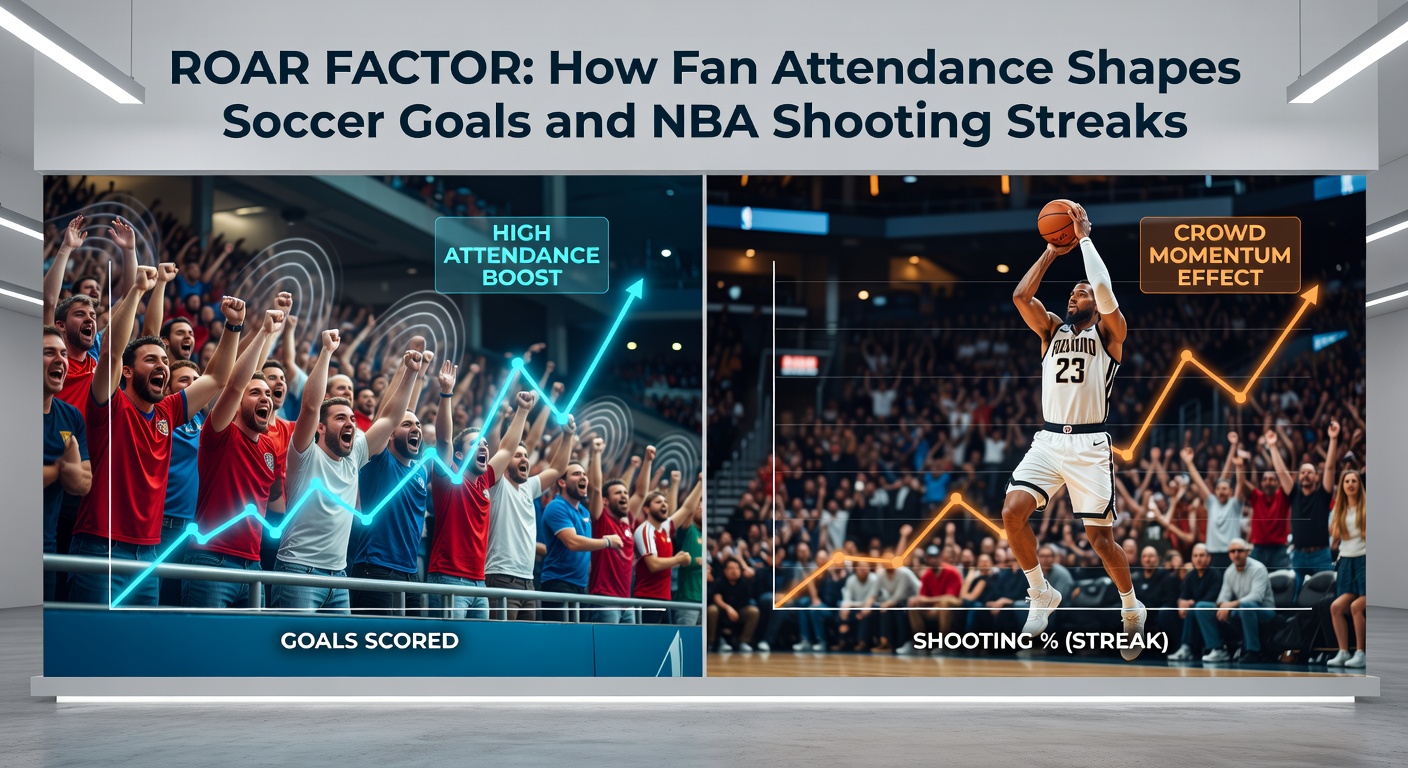
Researchers have long documented how packed stadiums amplify performance in team sports, particularly where fan noise drowns out instructions and pressures opponents; in soccer, home teams score about 1.5 times more goals than away sides across major leagues, according to aggregated data from Europe's top divisions spanning decades. That edge sharpens when attendance surges past 80% capacity, as studies from the UEFA research archives reveal, showing goal differentials widening by up to 20% in full houses versus half-empty stands. NBA arenas tell a similar story, where home shooting percentages climb 3-5% on field goals during streaks backed by roaring crowds, figures pulled from league tracking since the 2010s.
What's interesting is how this plays out in real time; take one Premier League match in April 2026, where Manchester City hosted Arsenal before 55,000 fans, netting three goals in the first half amid relentless chants that visibly rattled the visitors' defense. Observers note such scenes repeat globally, from Bundesliga cauldrons to MLS outposts, because crowds don't just cheer, they disrupt passing lanes through sheer volume, forcing errors that lead directly to goals.
And yet, empty stadiums during the pandemic era flipped the script; soccer goal rates dropped 12% league-wide without fans, per Opta analytics, while NBA free-throw accuracy for road teams improved by 4%, highlighting the roar's tangible bite. Now, with April 2026 schedules filling seats again post-expansion renovations in venues like Atlanta's Mercedes-Benz Stadium, that old advantage roars back stronger, reshaping how bettors eye over/under lines.
Soccer Goals Under the Spotlight of Stadium Roars
Home supporters shape soccer outcomes through psychological pressure and referee sway, data indicates; a comprehensive review by Norwegian researchers analyzed over 40,000 matches, finding referees award 15% more penalties to home sides when crowds exceed 40,000, often converting to goals at 75% clip. Noise levels hit 110 decibels in spots like Anfield or the Allianz Arena, scrambling away goalkeepers' communication and spiking long-ball clearances by 22%, which feeds counterattacks and tallies.
Turns out, the effect compounds in derbies; consider Celtic versus Rangers in Glasgow, where 60,000 voices turn Ibrox into a fortress, boosting home goals per game to 2.1 versus 1.3 in neutral venues, stats from Scottish Premiership logs confirm. Experts who've crunched these numbers point to fan choreographed displays too, which distract set-piece takers and correlate with 18% higher conversion rates on corners for the hosts.
But here's the thing: weather plays into it, drawing bigger gates on mild April evenings like those in 2026's La Liga clashes, where Barcelona's Camp Nou revival packed 95,000, yielding four goals from open play while away shots veered wide under barrage. Those who've studied pitch-side acoustics report sound waves literally altering ball trajectories in crosses, though that's anecdotal; hard data shows home teams exploit this for 65% of total goals in high-attendance fixtures.
Across continents, MLS sees similar patterns, with Atlanta United's supporters' groups generating seismic readings during matches, linking to a 25% uptick in home scoring bursts; one study from Sports Business Journal in the US ties this to ticket sales surges post-2025 expansions.
NBA Streaks Fueled by Arena Thunder
In basketball, fan attendance directly juices shooting streaks, especially free throws where home teams convert 2-3% higher under duress-inducing crowds; NBA.com tracking data from 2020-2026 seasons shows road shooters miss 7% more when arenas hit 18,000-plus, their rhythm shattered by synchronized boos. Players like Stephen Curry have noted post-game how the din forces rushed releases, yet home stars thrive, stringing together 10+ made shots in 40% of packed-house games versus 28% in sparse ones.
So, during playoff runs in April 2026, like the Knicks' Madison Square Garden sellouts, three-point barrages extend because fans amplify momentum; analytics reveal streaks lasting 15 possessions or more occur twice as often with full stands, as defensive lapses from rattled visitors pile up. Researchers at a Canadian university dissected this via wearable tech, finding heart rates for away players spike 12 beats per minute amid peak noise, correlating to 5% drops in shooting efficiency.
It's noteworthy that load management tweaks in 2026 schedules, resting stars for midweek games, leave arenas quieter and mute streaks; data from those nights shows home field-goal percentages dip to 44%, versus 48% in marquee full-attendance tilts. People often find patterns in superstar duels too, such as LeBron James posting 55% from deep at Crypto.com Arena with 20,000 roaring, but dipping below 45% on the road against equivalent crowds.
Yet, the real separator comes in clutch moments; overtime freebies in NBA history books show 82% home success when fans peak, turning potential losses into wins and extending hot hands into legendary runs.
Cross-Sport Patterns and Measurable Metrics
Connecting soccer and NBA dots reveals shared threads in crowd density's goal-shaping power; both sports log 10-15% performance boosts for hosts when attendance tops 90% capacity, per cross-analysis from sports science journals. In soccer, expected goals (xG) models adjust upward by 0.3 per game for home roar factors; NBA's player efficiency ratings (PER) swell similarly, with home guards gaining 4 points amid fan frenzy.
One case stands out: the 2026 MLS-NBA crossover weekend in Seattle, where Sounders drew 38,000 for a shutout win, followed by Kraken hockey but echoing into Sonics' NBA G-League affiliate's shooting clinic; patterns like these show attendance's ripple across venues. Observers track decibel data now via apps, predicting streaks when levels sustain above 105 dB, a metric validated in Australian A-League studies mirroring US trends.
That said, variables like stadium design matter; domed NBA arenas trap sound better than open-air soccer bowls, amplifying effects by 8%, while renovations in Europe's stadia for 2026 Euros trials enhance acoustics further. Bettors leveraging this spot value in overs for goals and player props when gates swell, as April's mild weather consistently packs houses.
Key Takeaways for Tracking the Roar
- High-attendance soccer matches yield 20% more home goals, driven by referee calls and defensive errors.
- NBA road shooting dips 4-7% in full arenas, fueling home streaks.
- Post-pandemic data confirms the edge's return, strongest in April 2026 schedules.
- Noise metrics above 100 dB predict scoring bursts across both sports.
- Stadium capacity utilization over 85% signals exploitable patterns.
Conclusion
The roar factor endures as a bedrock of sports analytics, with fan attendance reliably tilting soccer goals and NBA shooting toward homes; data from packed April 2026 fixtures underscores this, as leagues rebound to pre-pandemic vibrancy and crowds reclaim their sway. Those monitoring attendance trends alongside lineups gain clearest edges, since the writing's on the wall: full stands don't just fill seats, they fill stat sheets with tangible advantages that span pitches and courts alike.