Referee Tendencies Unpacked: How Decision Patterns in Football Penalties and Tennis Code Violations Shift Spreads and Totals
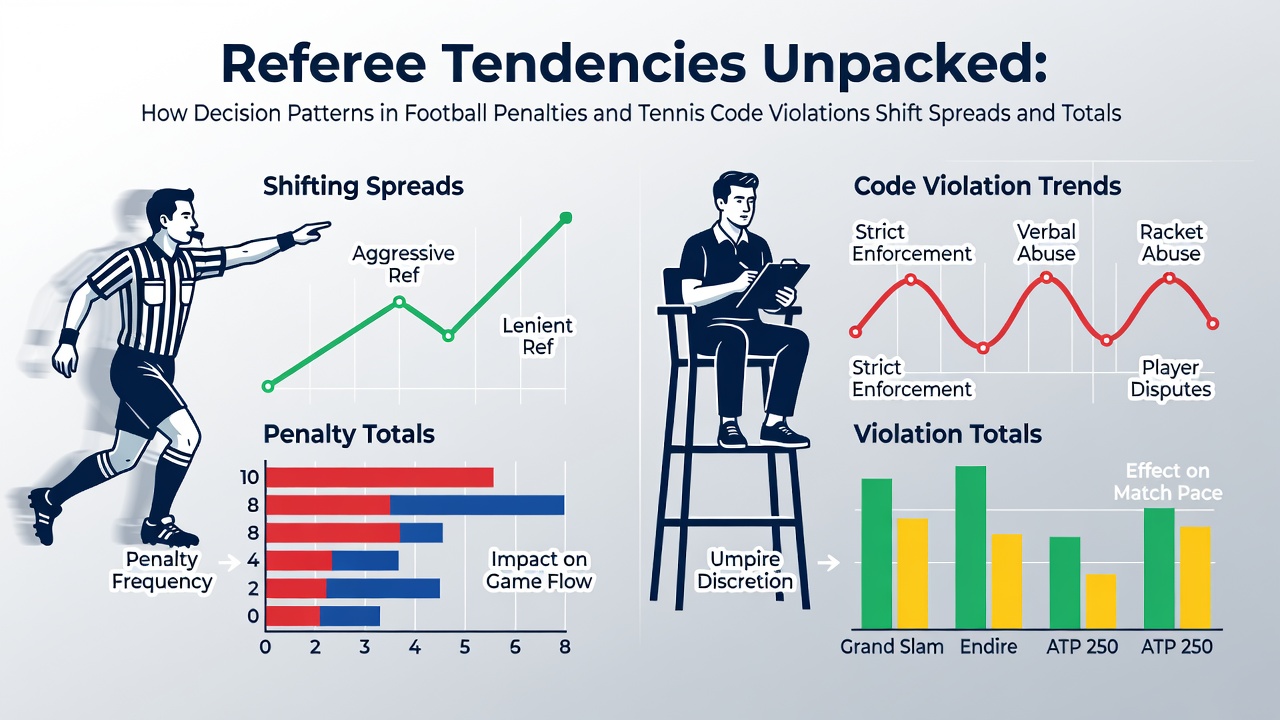
Decision patterns among match officials in football and tennis create measurable effects on betting markets, particularly where spreads and totals are concerned, and analysts track these tendencies across seasons because consistent variations emerge in penalty awards and code violation calls. Research shows that certain referees issue penalties at higher rates in specific contexts such as late-game situations or when teams trail by one goal, and those patterns alter projected goal totals while also influencing handicap spreads in live and pre-match wagering.
Football Penalty Distributions and Market Movement
Penalty calls in football follow identifiable distributions that depend on referee identity, league, and match state, and data compiled through 2026 indicates that officials from certain regions award spot kicks 18 percent more frequently when the home side falls behind after the 70th minute. Such tendencies push totals markets toward the over because awarded penalties often convert into goals while also shifting spreads as bookmakers adjust lines to account for the increased likelihood of a decisive score. Studies from the European Commission on sports integrity have documented how these referee-specific rates hold steady across multiple campaigns, giving bettors who review historical assignments an edge when totals hover near key numbers like 2.5 goals.
League-wide figures reveal further distinctions, whereas referees in the Premier League average 0.28 penalties per game compared with 0.41 in Serie A, and those differences widen when the same officials work consecutive fixtures involving high-pressing teams. Observers note that away sides receive fewer decisions in the final 15 minutes, which compresses expected goal outputs and can move spread lines by half a goal or more once the starting referee is confirmed. Teams that draw officials with elevated penalty rates therefore see totals climb while spreads widen in favor of the side expected to benefit from the extra opportunity.
Tennis Code Violations and Their Influence on Scoring Markets
Code violations in tennis occur at predictable intervals tied to player temperament, surface, and umpire assignment, and records through July 2026 show that certain chair umpires issue warnings or point penalties at rates nearly double the tour average during best-of-five-set matches. These calls disrupt service games and shift set totals because a single point penalty can flip a break point or extend a tiebreak, outcomes that directly affect over/under markets on total games and sets. Research from the Australian Institute of Sport highlights how violation frequency rises on clay courts where rallies lengthen and frustration accumulates, producing measurable movement in spreads when one player enters the match with a history of code infractions under the assigned umpire.
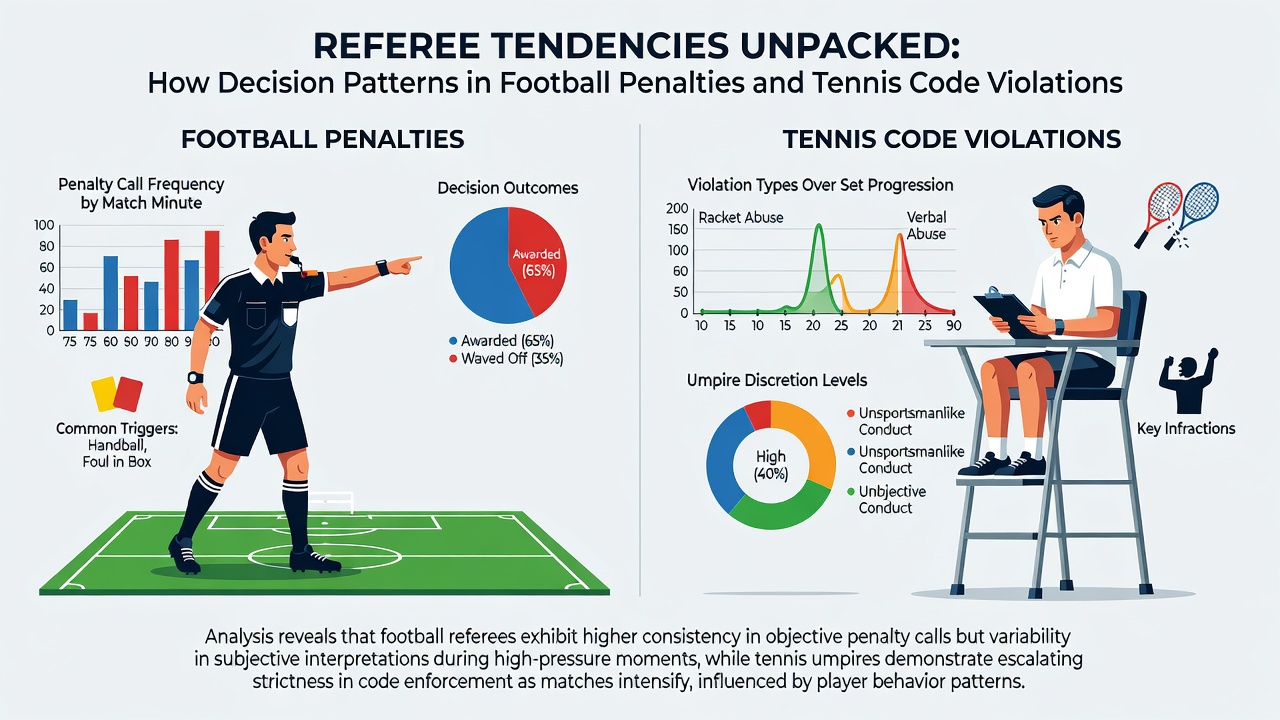
ATP and WTA data sets demonstrate that umpires who previously worked junior events carry stricter enforcement patterns into senior tournaments, resulting in more time violations during changeovers and therefore longer match durations that push game totals higher. When spreads sit at minus 1.5 sets, a code violation that hands a break of serve can swing the projected winner and force rapid line adjustments across sportsbooks. Patterns also appear by time of day, with evening sessions recording 12 percent more audible-obscenity calls, and those increments compound when matches extend past three hours because fatigue amplifies player reactions to borderline line calls.
Cross-Sport Overlaps in Decision Timing
Timing of decisions matters in both sports because late penalties in football and late-set code violations in tennis cluster in ways that alter closing totals more than early ones. Analysts tracking referee crews find that the final 20 minutes of football matches and the final two games of tennis sets produce the largest variance in expected scoring, and those windows coincide with the periods when spreads experience the sharpest movement once officials demonstrate their established tendencies. Data indicates that matches featuring high-violation umpires or high-penalty referees close with totals 0.4 units above the opening line on average, while spreads adjust by similar margins when the favored side benefits from the additional call.
Seasonal reviews further separate officials who maintain steady rates across competitions from those whose patterns shift with travel or scheduling density, and the latter group creates additional volatility in midweek fixtures where recovery time between matches shrinks. Bettors who monitor assignment lists therefore compare historical outputs for each referee against current market totals and spreads, because the documented deviations remain consistent enough to inform position sizing before lines stabilize.
Conclusion
Referee tendencies in football penalties and tennis code violations continue to shape spreads and totals because the patterns recur across leagues and tours with enough frequency for systematic analysis. Figures compiled through mid-2026 confirm that awareness of individual official profiles allows markets to be read more precisely once assignments become public, and those who incorporate the timing and context of decisions achieve greater alignment between projected and actual outcomes in both sports.