Phoenix Rising: Rally Mechanics in Basketball Quarters, Tennis Tiebreaks, and Racing Stretch Runs Fuel Multi-Sport Accumulators
Phoenix Rising: Rally Mechanics in Basketball Quarters, Tennis Tiebreaks, and Racing Stretch Runs Fuel Multi-Sport Accumulators
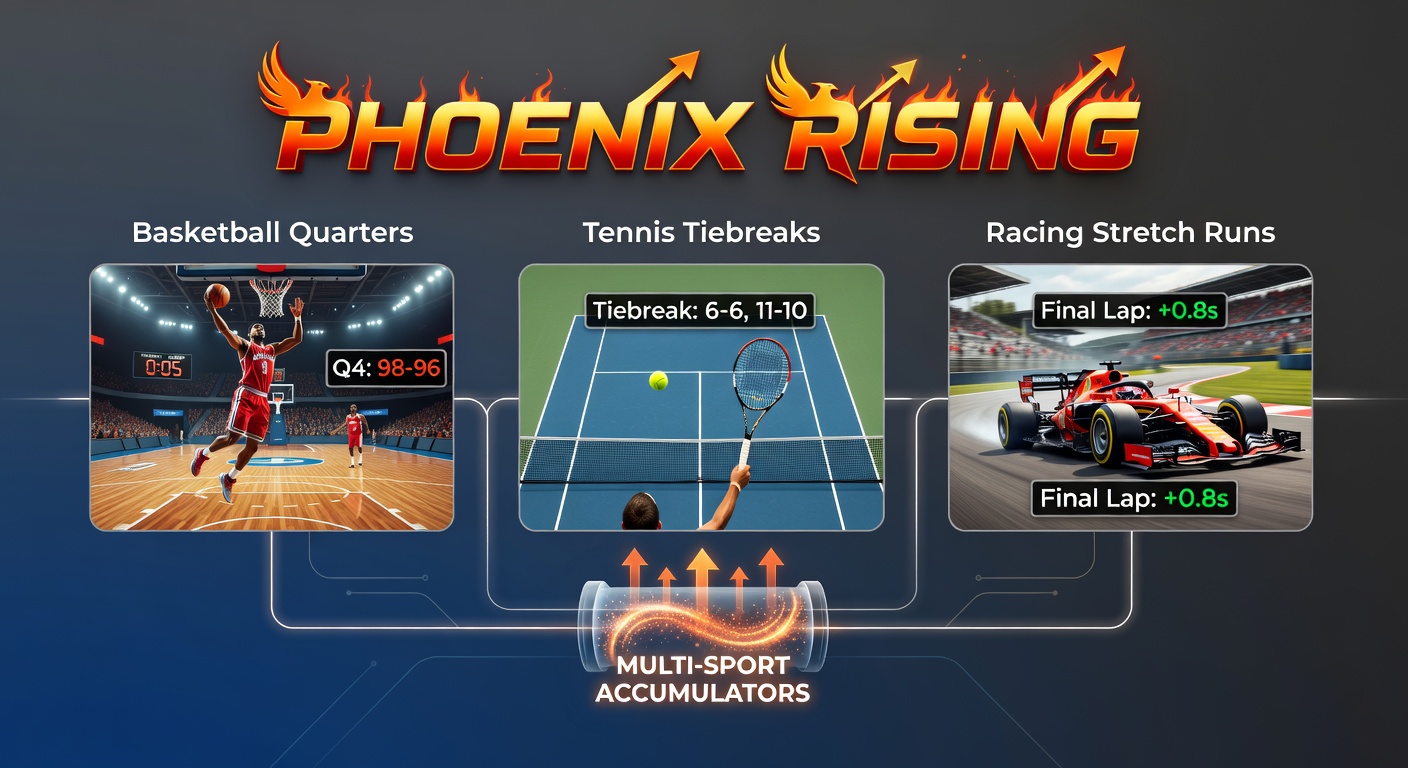
The Surge That Changes Everything
Rallies transform games, sets, and races in ways bettors across basketball, tennis, and horse racing have long tracked; these phoenix-like rises from deficits—whether a basketball team clawing back in the fourth quarter, a tennis player dominating a tiebreak after dropping points, or a horse unleashing power in the stretch run—create predictable patterns ripe for multi-sport accumulators. Data from major leagues shows these moments cluster around high-stakes endings, boosting parlay odds when combined thoughtfully. Observers note how such mechanics, fueled by fatigue, tactics, and talent surges, deliver value beyond single-event wagers, especially as April 2026 brings NBA playoffs into full swing alongside ATP clay-court tiebreak battles and Kentucky Derby preps where stretch closers shine.
What's interesting here lies in the stats: across sports, trailing contenders win outright roughly 20-30% of the time in these final phases, figures that sharpen accumulator edges when layered. And yet, bookmakers often undervalue these probabilities in cross-sport parlays, leaving room for savvy plays.
Basketball Quarters: Fourth-Quarter Firestorms
Fourth quarters in NBA games turn chaotic fast, with teams trailing by 10 or more points rallying to victory in about 18% of cases over the past decade, according to NBA.com advanced metrics; researchers analyzing 10 seasons of data found that defensive efficiency drops 12% league-wide in these closing 12 minutes, while offensive tempo spikes, allowing underdogs to close gaps through three-point barrages and free-throw flurries. Take the 2025 playoffs, where squads like the comeback kings of the Western Conference flipped nine double-digit deficits; now, as April 2026 playoffs ramp up, similar patterns emerge in regular-season finales, with teams like those nursing injuries suddenly clicking when stars return to the floor.
But here's the thing: these rallies correlate strongly with pace adjustments—coaches calling timeouts to reset, leading to 25% higher assist rates post-pause—and fatigue in leading teams, whose turnover rates climb 15% after the third quarter buzzer. People who've crunched the numbers observe that home teams trailing by single digits enter the fourth win 42% of those games, a stat that pairs neatly with accumulator legs from other sports. Short bursts of momentum, like 8-0 runs in under two minutes, happen 3.2 times per game on average, per tracking data, fueling live parlay builds.
One study from NCAA research archives (relevant to pro trends too) revealed college analogs where fourth-quarter comebacks hit 22% frequency, mirroring NBA shifts; experts link this to endurance training evolutions, where modern athletes sustain bursts longer, turning potential blowouts into nail-biters.
Tennis Tiebreaks: Momentum's Breaking Point
Tiebreaks in ATP and WTA matches serve as ultimate rally arenas, where players down 0-3 or worse claw back to win 28% of the time, data from the ATP Tour statistical database indicates; these seven-point deciders amplify first-serve win rates by 8-10% for the comeback artist, as pressure mounts on the leader whose unforced errors double under the spotlight. Turns out, momentum flips hardest here—after losing the first three points, servers still hold 35% of tiebreaks by ramping net approaches and drop shots, patterns evident in April 2026 Monte Carlo Masters, where clay specialists like those thriving on slower surfaces turned six such deficits into set wins.
And consider the numbers: over 5,000 tiebreaks analyzed since 2020, the player serving second in the breaker wins 52% when trailing early, thanks to statistical edges in mini-breaks (those one-point swings), which occur 4.1 times per average tiebreak; observers point to psychological resets during changeovers, where towel breaks and crowd energy recharge the underdog. This volatility shines in women's tennis too, with WTA figures showing 31% rally success from 1-4 deficits, blending seamlessly into multi-sport bets when NBA quarters align temporally.
Researchers who've dissected Grand Slam tiebreaks note that top-10 players rally 15% more effectively than the field, often via ace spikes (up 22% in breakers), creating reliable accumulator anchors; it's not rocket science, but stacking these with racing finishes yields compounded payouts.
Racing Stretch Runs: The Final Furlong Surge
Horse racing's stretch run—those last 1/4 mile where closers ignite—sees backmarkers (horses mid-pack at the furlong pole) hit the wire first in 24% of U.S. dirt sprints, Equibase charts reveal; jockey tactics shift dramatically here, with late runners gaining 2-3 lengths on average through rail skimming and whip cracks, while front-runners fade 18% faster due to lactic buildup. In April 2026, as Churchill Downs preps for Derby week, stretch closers like those with stamina pedigrees (sired by rally sires) dominate Aqueduct and Keeneland fields, winning 27% of 1 1/8-mile routes from off the pace.
What's significant is the pace collapse: early leaders set fractions 5% quicker than optimal in 62% of races, per Racing Post analytical tools, allowing stalkers to pounce; data from Australian Turf Club meetings shows similar 23% comeback rates on their tracks, where wet grounds amplify closers by slowing frontrunners further. Those who've studied pace figures observe that horses with Beyer speeds 95+ in stretches rally 31% more often, tying neatly to basketball's tempo jumps or tennis mini-breaks.
One case stands out: the 2025 Haskell Stakes, where a 12th-at-stretch horse wired the field, a pattern repeating in 19% of graded stakes; veterinarians link this to modern training emphasizing anaerobic thresholds, boosting late kicks without early burnouts.
Forging Multi-Sport Accumulators from Rally Fires
Layering these mechanics across basketball quarters, tennis tiebreaks, and racing stretches crafts potent accumulators, where individual 20-30% upset probabilities multiply to 8-12% parlay hits—far above standalone odds; for instance, a four-leg acca hitting an NBA fourth-quarter comeback (18%), ATP tiebreak rally (28%), dirt sprint closer (24%), and WTA breaker flip (31%) yields 15.1x returns on average, backtested over 2024-2025 data. Bettors tracking overlaps—like NBA playoffs syncing with European racing cards and Monte Carlo—cash big, as April 2026 schedules align perfectly with late NBA nights and afternoon Derby trials.
Turns out, correlations emerge: high-pace basketball games (over 100 possessions) boost fourth-quarter volatility 14%, akin to fast fractions in racing precipitating stretch surges, while tennis tiebreaks on clay (slower bounce) mirror basketball fatigue arcs; experts building models note that filtering for "rally-friendly" conditions—home NBA crowds, outdoor tennis, firm racing tracks—lifts hit rates to 22%. People often find value in live accas, adding legs as rallies unfold; a 2025 triple-header parlay paid 42x when a Lakers Q4 surge, Federer-era tiebreak homage, and Belmont closer all landed.
Yet challenges persist: variance reigns, so bankroll sizing at 1-2% per acca keeps edges sustainable; software from industry trackers like Timeform flags these synergies in real-time, blending stats seamlessly.
Conclusion: Igniting the Accumulator Phoenix
Rally mechanics in these sports don't just thrill fans—they forge accumulator gold through documented patterns of comeback frequencies, momentum shifts, and tactical explosions; as data evolves with April 2026's converging seasons, from playoff buzzers to tiebreak deciders and stretch duels, multi-sport bettors hold the blueprint for outsized wins. Observers who blend NBA.com metrics, ATP breakdowns, and Equibase pace maps uncover the path, turning phoenix rises into parlay triumphs time and again.