Mapping the Interplay Between Varying Court Speeds and Serve Efficiencies Across Tennis Surfaces for Layered Accumulator Construction
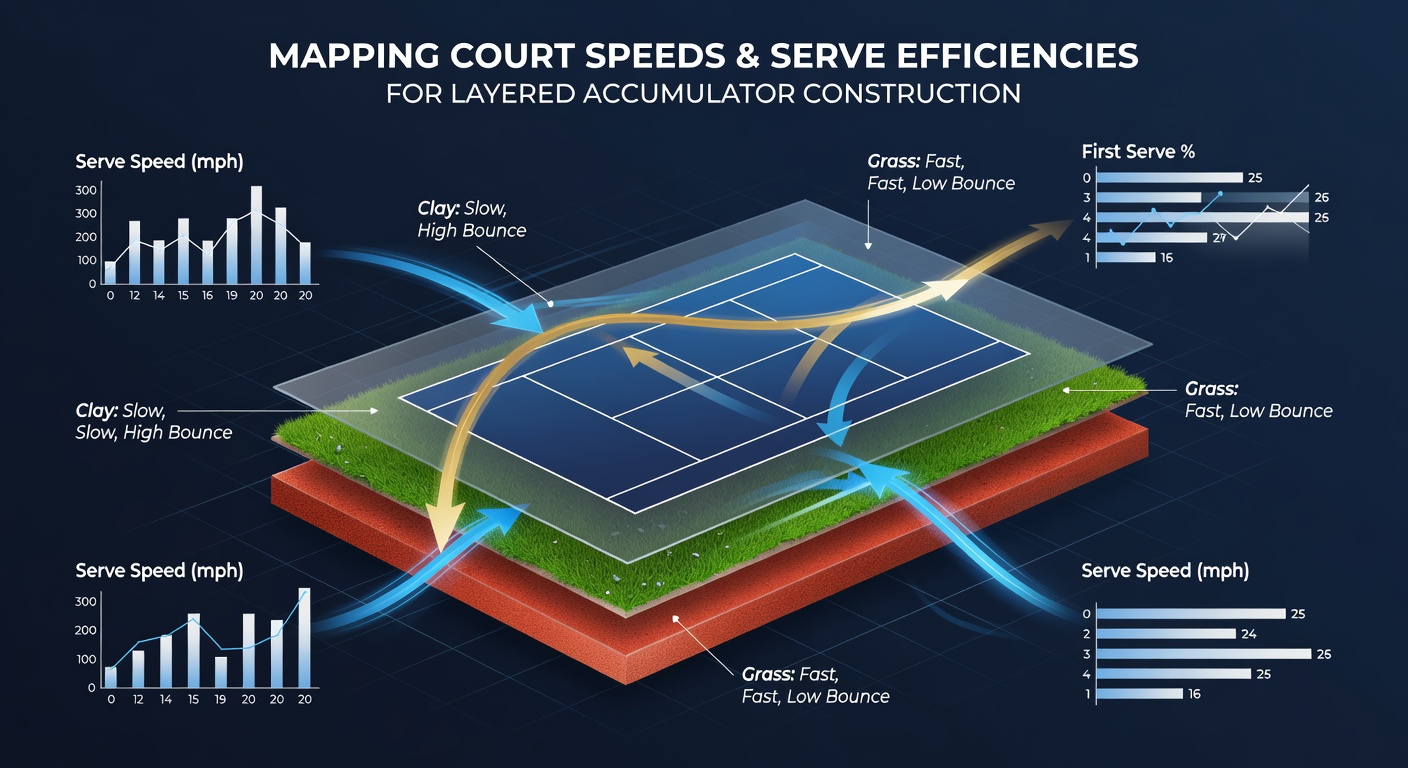
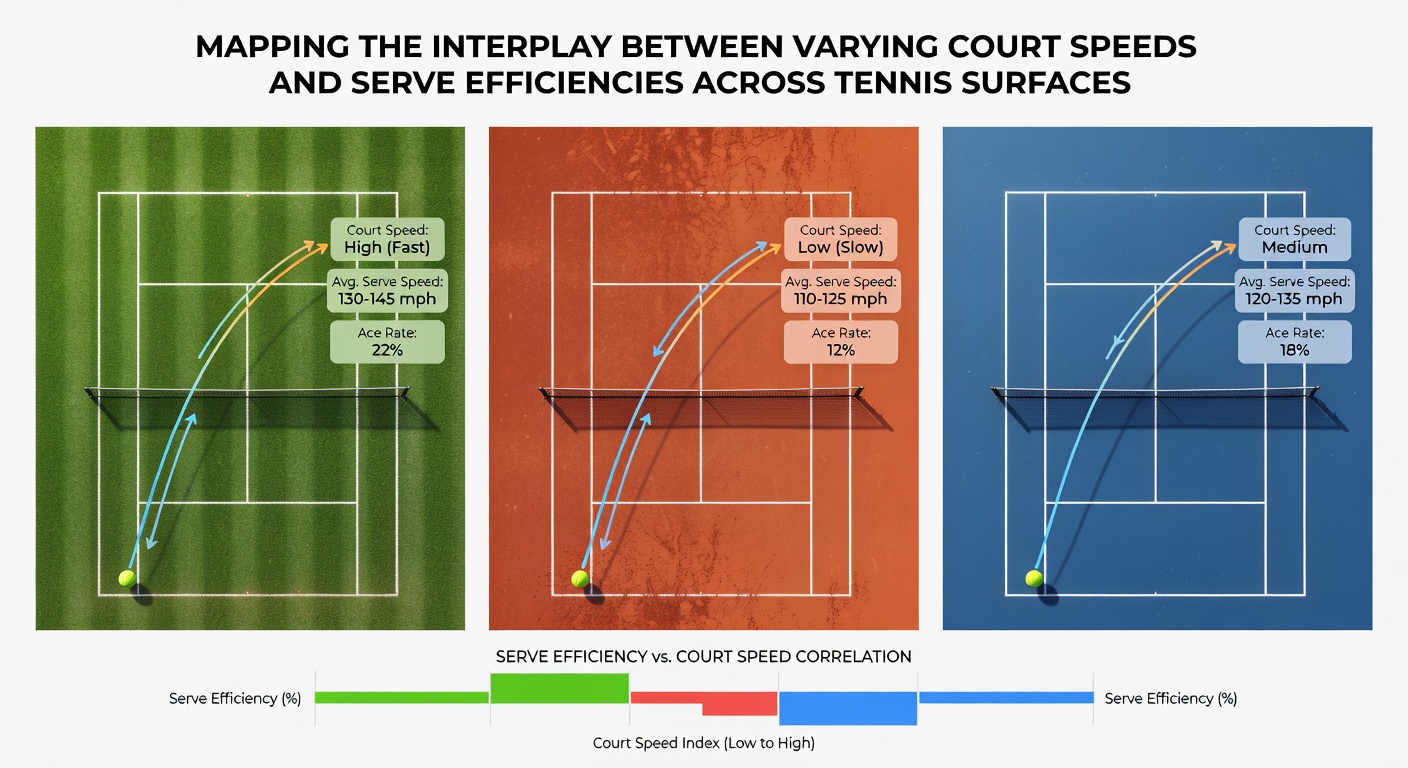
Professional tennis surfaces present distinct physical characteristics that shape serve performance in measurable ways, and observers note how these factors feed into accumulator models that layer multiple matches across a tournament schedule. Clay courts slow ball velocity through higher friction while grass accelerates it via lower resistance, whereas hard courts sit between the two depending on the specific composition used at each venue. Researchers tracking ball bounce and speed data across ATP and WTA events have documented how first-serve win percentages shift by as much as 12-15 points when the same players move between surfaces during a single season.
Surface Speed Profiles and Their Measurable Effects
Court speed ratings published by the International Tennis Federation assign numerical values that allow direct comparison, with grass often scoring above 45 while clay falls below 35 on the same scale. Serve efficiency follows these ratings because faster surfaces reduce the time opponents have to react, which lifts ace percentages and first-serve points won. Data collected during the European swing shows players with flat, high-velocity serves record higher hold percentages on grass than on clay, yet the gap narrows when those same athletes face return specialists who excel at handling pace. In June 2026, several ATP 500 events on European grass courts provided fresh datasets that confirmed earlier patterns while adding detail on how humidity levels further modulate bounce height.
Serve Efficiency Metrics Across Surfaces
Analysts break serve efficiency into components that include first-serve percentage, ace rate, double-fault frequency, and points won behind the first delivery. On grass these numbers trend higher for servers who rely on placement and raw speed, while clay rewards heavy spin and consistent depth that forces errors from returners. Hard courts produce intermediate results that depend on the court’s pace rating and the altitude of the venue. Figures from the Australian Open and Indian Wells illustrate how the same player cohort adjusts serve strategies within days of switching surfaces, with statistical models capturing these transitions through rolling averages rather than single-match snapshots.
Building Layered Accumulators Using Surface Data
Accumulator construction benefits when bettors group matches by surface category before layering selections, because serve dominance on one surface does not automatically transfer to another. Models that incorporate court-speed adjustments assign different weights to serve-related stats depending on whether the event takes place on grass, clay, or hard courts. Researchers at the Australian Institute of Sport have published work showing that surface-adjusted serve-efficiency ratings improve prediction accuracy for multi-match sequences compared with raw averages. One approach involves sequencing selections so that grass-court servers appear early in an accumulator while clay-court grinders anchor later legs, thereby aligning player strengths with the physical demands of each surface.
Additional layers can incorporate opponent return statistics and recent surface-specific form, creating a matrix that updates as tournaments progress. Tournament directors sometimes alter court preparation between years, which shifts speed ratings and requires recalibration of the underlying data feeds. Observers tracking these changes note that even small adjustments in grass length or clay moisture content alter ace frequency enough to affect accumulator outcomes when several matches are combined.
Regional and Seasonal Variations in 2026
June 2026 marked the transition from European clay to grass, with events in Halle and London supplying early benchmarks for serve performance under new conditions. Temperature fluctuations during this period further influenced ball speed, as warmer conditions on grass increased pace while cooler mornings on clay retained more moisture. Models that account for these micro-variations produce tighter confidence intervals when multiple selections are stacked, particularly when the accumulator spans both clay and grass legs within the same week. Data from the ATP and WTA tours, combined with venue-specific reports, allow ongoing refinement of surface coefficients used in accumulator algorithms.
Conclusion
Mapping court speeds against serve efficiencies supplies a factual framework for constructing layered accumulators that respect the physical realities of each tennis surface. Continuous collection of bounce, speed, and win-rate statistics enables periodic updates to the models, while seasonal transitions such as the June shift to grass provide natural test periods for validation. Those who integrate these surface-specific metrics maintain alignment between player attributes and court demands across successive matches.