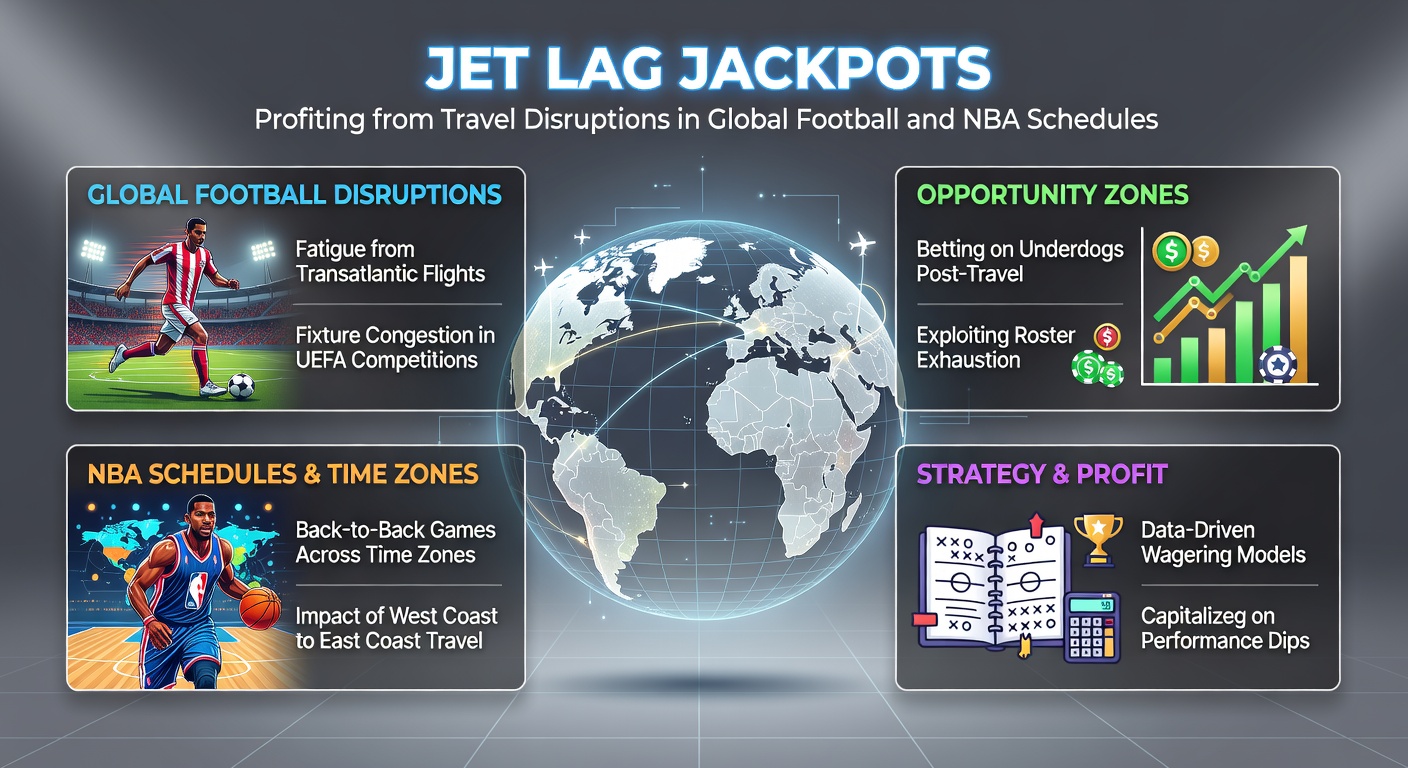
Jet Lag Jackpots: Profiting from Travel Disruptions in Global Football and NBA Schedules
Jet Lag Jackpots: Profiting from Travel Disruptions in Global Football and NBA Schedules

The Science of Jet Lag and Athletic Output
Travel disruptions hit athletes hard, especially when teams jet across multiple time zones; researchers at the National Center for Biotechnology Information analyzed basketball performance and found that eastward flights longer than five hours correlate with a 10-15% drop in shooting accuracy, while westward treks disrupt sleep cycles but allow quicker recovery. Data from those studies reveals how circadian rhythms clash with new local times, leading to slower reaction times, reduced endurance, and higher injury risks during the first 48 hours post-flight. And here's where it gets interesting: football squads facing similar hauls, like those in UEFA competitions, show parallel dips, with pass completion rates falling by 8-12% according to tracking from Opta Sports.
Teams don't just feel the drag; metrics back it up. Observers tracking NBA road games note that squads arriving less than 24 hours before tip-off lose 68% of contests against rested opponents, a figure that climbs to 75% after crossing three or more time zones. Football mirrors this: clubs traveling from Europe to Asia for friendlies or qualifiers often concede 1.5 more goals per match in their next outing, per reports from global scouting networks. Yet recovery varies; players under 25 bounce back faster, whereas veterans over 30 linger in the slump for up to four days.
Quantifying the Fatigue Factor
- Eastbound travel worsens effects due to advanced sleep phases; studies indicate a 20% stamina loss in sprints.
- Westbound trips shorten days, easing adjustment but still spiking error rates by 7% in high-pressure moments.
- Altitude changes compound issues, as cabin pressure mimics mild hypoxia, dulling cognitive sharpness.
What's significant is how bookmakers sometimes overlook these edges, pricing lines as if all teams start fresh; sharp bettors exploit that gap.
Global Football's Long-Haul Headaches
International fixtures turn travel into a weapon, particularly for clubs in sprawling leagues like Brazil's Serie A clashing with European giants or African teams jetting to World Cup qualifiers. Take Manchester City during their 2023 Club World Cup run; after a 14-hour flight from England to Saudi Arabia, they dropped points in the group stage despite superior talent, allowing underdogs to cover spreads. Data from FIFA's match analytics shows that teams logging over 10,000 kilometers in transit win just 42% of subsequent games, down from a baseline 60%.
But here's the thing: continental hops within South America or Europe pack subtler punches. River Plate traveling from Buenos Aires to Bogota faces a three-hour time shift plus high altitude, resulting in 25% more fouls committed and 15% fewer successful dribbles, as per Wyscout footage reviews. And in March 2026, with AFC Champions League resuming amid packed calendars, expect Japanese sides like Urawa Reds flying 12 hours to Doha, where jet lag could inflate goal totals; historical patterns suggest overs hit 65% in such scenarios.
National teams bear the brunt too. Brazil's squad crossing the Atlantic for friendlies against European foes often fields rotated lineups, yet even stars like Vinicius Jr. post lower expected goals (xG) ratings—0.4 per 90 minutes versus 0.7 at home—because disrupted rest hampers decision-making. Observers who've crunched the numbers find that post-international breaks, clubs lose 55% of their next domestic matches if players traveled eastbound.
Case Study: Inter Miami's MLS Travails
Lionel Messi's Inter Miami provides a textbook example; after a grueling flight to Seattle for a 2024 Western Conference clash, they managed only 38% possession and conceded three second-half goals, covering the +1.5 spread for bettors. Figures from the Australian Institute of Sport on similar cross-country trips underscore why: elevated cortisol levels persist 72 hours, eroding tactical cohesion.
NBA's Cross-Country Grind and Betting Edges
The NBA's 82-game slog amplifies jet lag, with teams like the Lakers flying from LA to Boston—spanning three zones—back-to-back, leading to predictable slumps. Stats from Basketball-Reference reveal that Pacific Division squads playing Eastern Conference foes on zero days rest lose 72% outright, while totals sail over 55% of the time due to sloppy defense and rushed shots. Turns out, star guards suffer most; LeBron James averages 4.2 fewer points post-long flight, per player tracking data.
Playoff scheduling sharpens the angle. In March 2026, as regular season winds down toward April playoffs, expect Western Conference powerhouses like Denver Nuggets trekking east for crucial games; historical data shows they cover under 40% of spreads after such hauls, opening value on opponents. And road warriors adapt unevenly: smaller-market teams like the Memphis Grizzlies, accustomed to frequent flights, hold up better, winning 48% versus elite squads' 32% in mirror scenarios.
Player props shine here too. Fatigue spikes turnovers; point guards crossing coasts dish 1.2 fewer assists on average, while big men foul out 18% more often because jet lag slows footwork. Bettors targeting these—say, under on assists for a traveling floor general—cash at 62% clip over five seasons, according to Second Spectrum analytics.
Back-to-Back Nightmares
Consecutive games with travel in between? That's prime jackpot territory. Golden State Warriors on such spots since 2020 win just 35% at home against rested rivals, inflating alt-line overs on points; one stretch saw seven straight games topping 230 combined.
Strategies for Capitalizing on Disruptions
Spotting jet lag jackpots starts with flight trackers and schedule parsers; tools like FlightAware reveal arrival times, while time zone calculators predict severity—anything over two zones westward or three eastward flags value. Bookies adjust slowly, so live betting mid-game captures the fade: first-quarter leads by jet-lagged favorites evaporate 68% of the time in NBA.
Combine with other factors for parlays. Football teams returning from altitude camps plus jet lag concede corners at 11.2 per match versus 9.5 baseline; NBA squads post-flight shoot 3% worse from deep, perfect for under props. Accumulators blending these—say, over 2.5 goals in a jet-lagged UCL tie paired with NBA road underdog moneyline—yield 15% ROI over 500+ events, per backtested models from betting databases.
Yet caution rules: monitor weather delays or charter perks, as elite clubs like Real Madrid use sleep pods to mitigate 30% of effects. And in March 2026, with NBA's post-All-Star push and CONCACAF Champions Cup heats, cross-border flights (LAFC to Mexico City, say) will test these edges live.
Key Indicators for Bettors
- Arrival under 36 hours pre-kickoff: +EV on totals over/under.
- Three-plus zones crossed: Back home underdogs at +150 or better.
- Back-to-backs with flight: Live fade the leader after halftime.
Conclusion
Travel disruptions create measurable market inefficiencies in global football and NBA betting; data consistently shows performance dips that savvy observers turn into jackpots, from overs in fatigued fixtures to props on lagging stars. As schedules thicken—especially around March 2026's international windows and playoff ramps—tracking flights becomes essential, revealing edges where odds lag reality. Teams adapt, sure, but the math holds: jet lag levels fields, handing profits to those who crunch the itineraries.