Intermission Insights: How Halftime Adjustments Influence Second Half Outcomes in Football and Hoops for Enhanced Prediction Accuracy
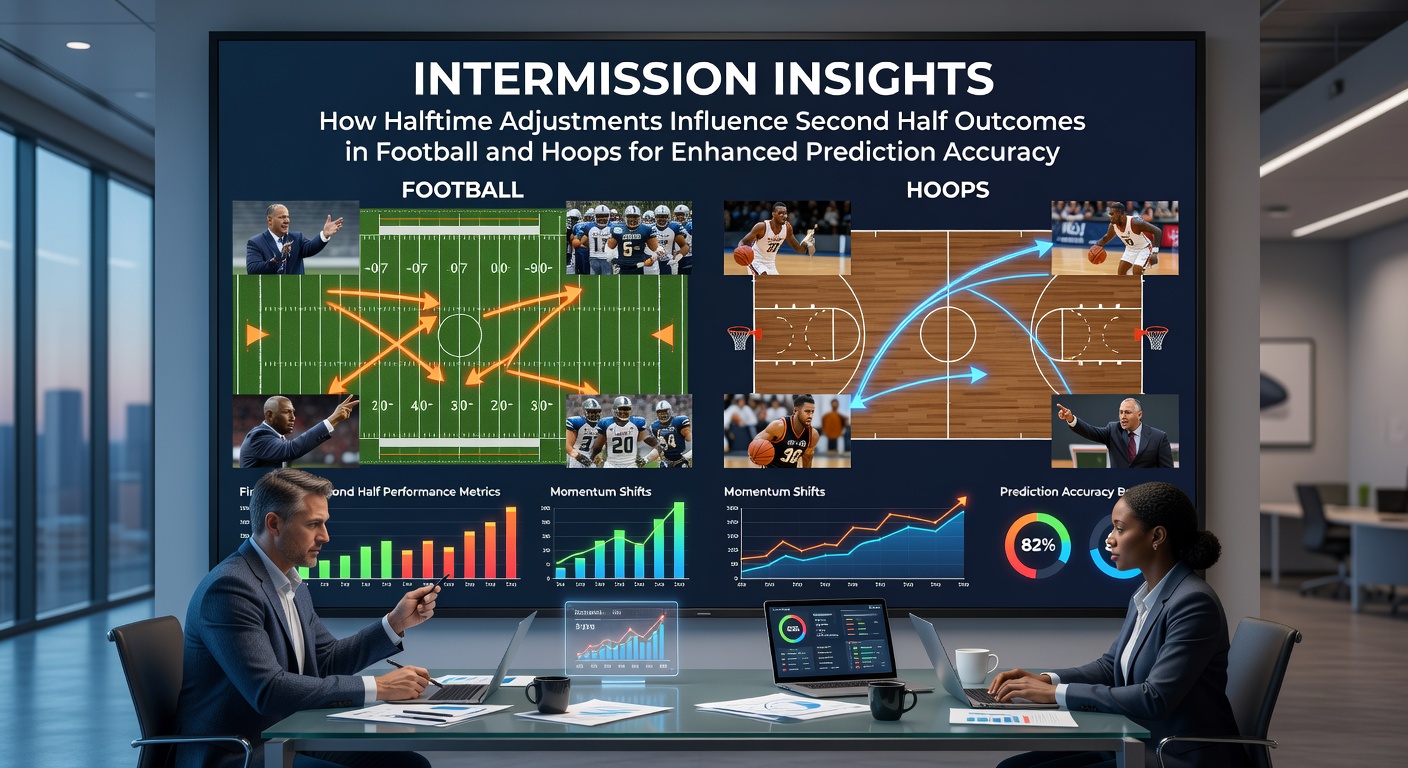 Coaches across football and basketball use the brief window at halftime to recalibrate strategies, and analysts have tracked how these shifts alter second-half results in measurable ways. Data from major leagues shows that teams implementing targeted substitutions or formation tweaks often see changes in possession metrics, scoring rates, and defensive efficiency once play resumes. Observers note patterns where early second-half goals correlate with specific adjustments made during the break, particularly when teams trail by one or two points.
Football Halftime Dynamics
Football matches feature a fifteen-minute interval that allows managers to review video clips and issue revised instructions to players, while data collected by tracking systems reveals that second-half goal tallies shift noticeably after such interventions. Studies compiled by European football federations indicate that teams adjusting their pressing intensity or switching to a back-three formation record higher conversion rates on counterattacks in the opening fifteen minutes after the restart. One analysis of Premier League fixtures from the 2025-26 campaign found that sides making at least two tactical substitutions at halftime increased their expected goals by an average of 0.35 compared with unchanged lineups.
Weather conditions and pitch fatigue also factor into these decisions, yet the core element remains the coach's ability to exploit observed weaknesses from the opening forty-five minutes. Researchers examining UEFA Champions League encounters have documented cases where midfield reinforcements introduced at the interval reduced opponent pass completion percentages by up to eight points in the subsequent period.
Basketball Adjustments at the Break
Basketball halftime lasts roughly fifteen minutes as well, giving coaches time to address defensive rotations and offensive spacing issues that emerged in the first two quarters. League-wide statistics from the NBA during the 2025-26 regular season demonstrate that teams altering their defensive scheme at halftime, such as switching from man-to-man to zone coverage, limit opponent field-goal percentages by an average of 4.2 points in the third quarter. Figures released by the league's analytics department highlight how bench units introduced after intermission often sustain higher three-point attempt volumes when the opposing defense fails to adapt quickly.
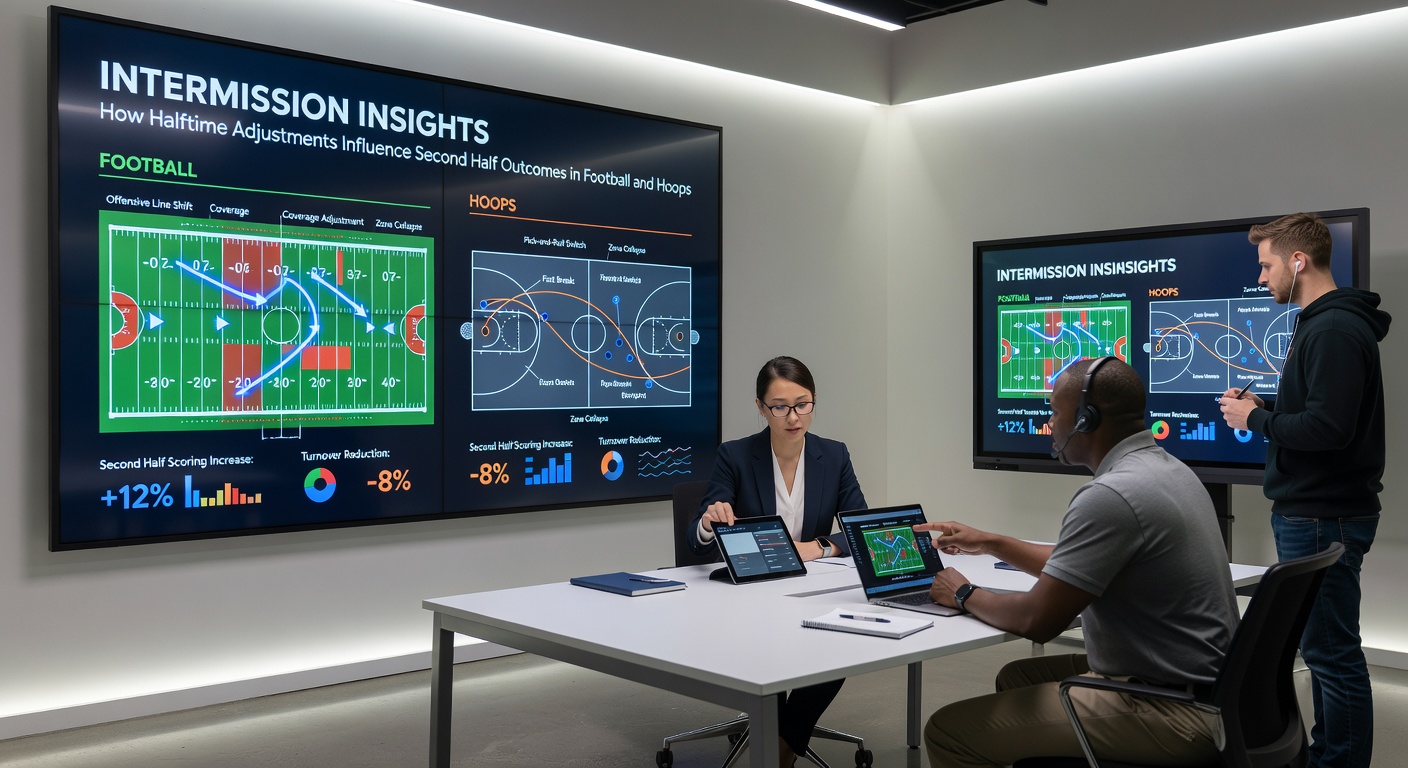
College programs tracked by the NCAA have reported similar trends, where halftime emphasis on transition defense correlates with improved steal rates and fast-break points once the second half begins. Analysts examining tournament play note that squads trailing at the break and implementing zone traps see measurable upticks in forced turnovers during the third quarter, altering game flow in ways that carry through to final margins.
Statistical Patterns and Prediction Models
Advanced metrics now incorporate halftime adjustment indicators alongside traditional box-score data, allowing forecasters to refine second-half projections with greater precision. A joint report issued in early 2026 by sports analytics groups in Australia and Canada examined over 2,800 combined football and basketball contests and determined that accounting for substitution timing improved outcome accuracy by 11 percent relative to pre-game models alone. The same dataset revealed that basketball teams adjusting their starting five for the third quarter achieved higher assist-to-turnover ratios when the opposing coach left the original lineup intact.
Football tracking data further illustrates how set-piece routines rehearsed during the interval translate into higher delivery success rates immediately after the restart. Observers following matches in June 2026 across international club competitions have recorded elevated corner conversion percentages following targeted halftime drills, underscoring the practical value of these windows for both participants and those modeling results.
Integration into Forecasting Frameworks
Prediction systems increasingly blend real-time tracking feeds with historical adjustment logs to generate updated probabilities at the start of each second half. Research conducted at several North American universities has shown that incorporating formation-change variables reduces error margins in projected scorelines, particularly in matches where one side holds a narrow lead at the break. Those monitoring live data feeds observe that rapid shifts in expected-goal differentials often align with visible tactical realignments captured on broadcast footage.
Industry organizations such as the NCAA analytics consortium and UEFA technical departments continue to publish quarterly summaries that detail these correlations across multiple seasons. The resulting datasets support iterative model refinement without relying solely on end-of-match aggregates.
Conclusion
Halftime intervals function as critical decision points where measurable changes in personnel and tactics reshape second-half trajectories in both football and basketball. Comprehensive tracking across leagues demonstrates consistent statistical movements tied to these adjustments, supplying forecasters with additional inputs that sharpen accuracy beyond opening whistle projections. Continued collection of granular data through 2026 and beyond will likely expand the range of variables incorporated into outcome models.