How Preseason Regimens Shape Early Season Metrics and Market Adjustments in League Competitions
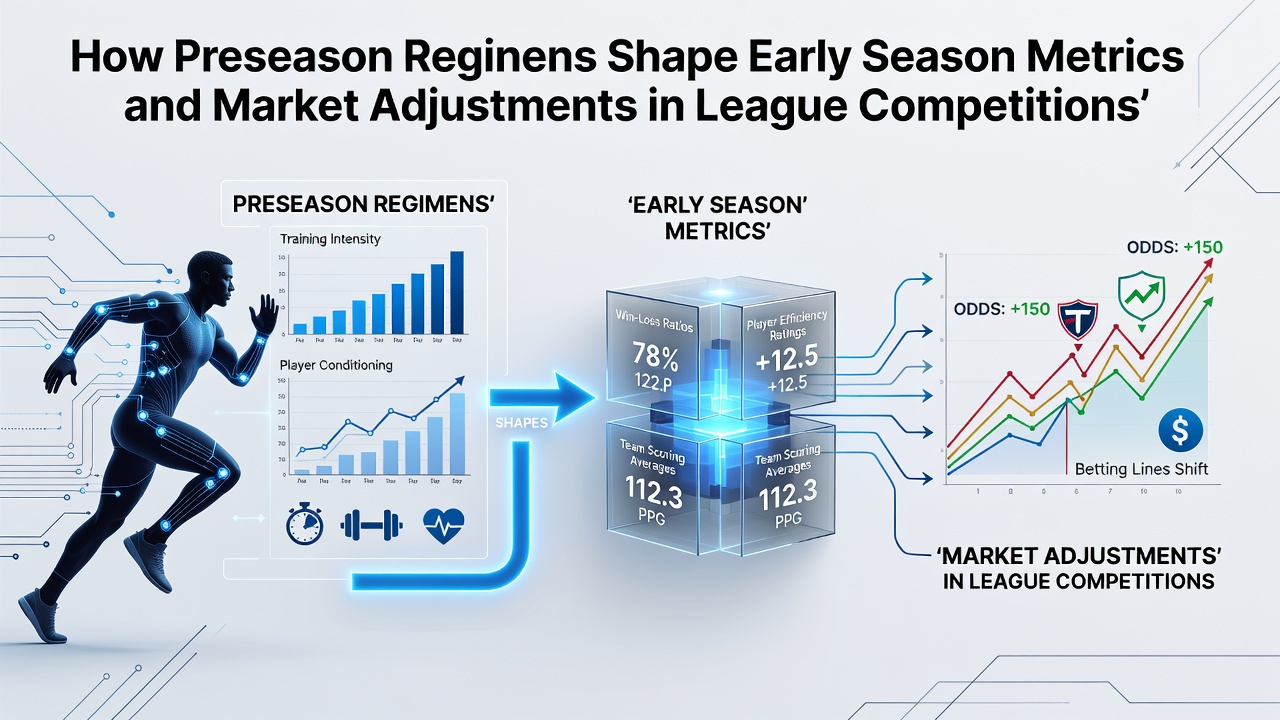
Preseason regimens in major league competitions establish the physical and tactical foundations that directly influence early season performance metrics across basketball, soccer, and other team sports. Teams begin intensive preparation periods in July 2026, with European soccer clubs and NBA franchises ramping up training camps that emphasize conditioning, skill drills, and recovery protocols. Data from multiple leagues shows that structured preseason workloads correlate with measurable differences in player availability and statistical outputs during the opening weeks of competition.
Training Load Management and Injury Patterns
Coaching staffs track external and internal load metrics during July sessions, using GPS devices and heart rate monitors to balance intensity with rest periods. Research from the Australian Institute of Sport indicates that teams maintaining moderate weekly training loads below 1500 arbitrary units experience fewer soft tissue injuries in the first six weeks of the regular season. Leagues such as the NBA and Premier League publish early season injury reports that reflect these patterns, with hamstring strains and ankle issues appearing less frequently among squads that incorporated periodized recovery blocks.
Player monitoring systems also record sleep quality and wellness scores throughout preseason, and organizations that integrate these variables into scheduling decisions report higher availability rates once games begin. Figures from the NBA Players Association highlight that teams averaging above 85 percent player participation in early season contests often maintained consistent load management practices during the preceding summer months.
Statistical Outputs in Opening Weeks
Early season metrics such as points per game, pass completion rates, and defensive efficiency ratings frequently trace back to specific preseason emphases. Soccer clubs that prioritized high-intensity interval sessions during July preparations tend to post elevated pressing intensities and distance covered in the first month of league play, according to data compiled by Opta. Basketball teams focusing on transition drills show improved fast-break percentages in October and November games, with league-wide tracking systems capturing these shifts through standardized box score categories.
Market Adjustments Following Early Results
Betting markets respond quickly to the statistical trends that emerge from the opening slate of fixtures. Oddsmakers adjust totals and spreads once initial performance data accumulates, incorporating injury reports and workload histories that originated in preseason planning. European soccer markets, for instance, see rapid movements in over/under lines after teams demonstrate sustained high pressing metrics established during summer camps. NBA futures markets similarly recalibrate playoff probabilities based on early defensive rating improvements tied to conditioning programs completed in July.
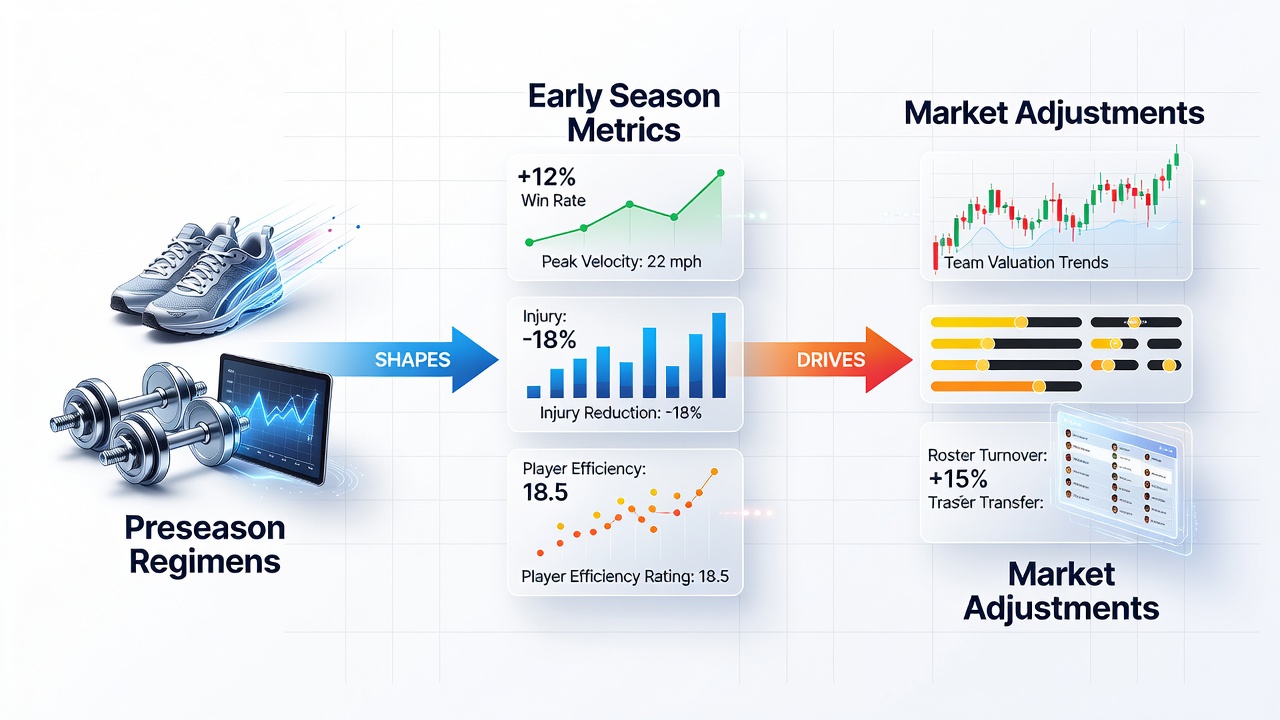
One study published by the University of Groningen examined how preseason training volume predicted changes in betting odds across multiple European leagues, finding that clubs with documented high-load periods showed statistically significant shifts in implied probabilities within the first eight matchdays. Market makers integrate these inputs alongside real-time performance tracking to refine lines before subsequent rounds of fixtures.
Cross-League Comparisons in 2026
July 2026 schedules reveal distinct approaches across competitions. NBA teams participating in the Las Vegas Summer League often use those games as controlled environments to test conditioning regimens before full training camps begin, while Premier League clubs conduct overseas tours that combine matches with high-volume training blocks. Data released by the NCAA shows similar patterns at the collegiate level, where programs with documented periodization plans post stronger early conference results in both basketball and soccer.
Observers note that leagues publishing centralized medical and performance databases enable more precise correlations between preseason practices and early season outcomes. The International Olympic Committee maintains an injury surveillance system that several professional leagues reference when refining their own protocols, contributing to standardized reporting across borders.
Longitudinal Data and Predictive Models
Advanced analytics departments build regression models that incorporate preseason GPS data, wellness questionnaires, and historical injury records to forecast early season availability. These models feed into both team roster decisions and external market pricing, as trading desks at major sportsbooks incorporate projected player minutes into their algorithms. Academic papers from Canadian universities have validated several of these approaches using multi-year datasets spanning professional and amateur leagues.
Teams that adjust regimens mid-preseason based on emerging fatigue markers often stabilize their metrics faster once competition starts. League-wide statistics compiled by governing bodies demonstrate that such adaptive strategies reduce variance in early season goal differentials and point differentials, producing steadier inputs for market pricing engines.
Conclusion
Preseason regimens establish measurable baselines that shape the statistical landscape of early season league competitions and prompt corresponding recalibrations in market pricing. Data from monitoring technologies, injury surveillance systems, and performance analytics platforms continues to link summer training decisions with outcomes observed in the opening weeks across basketball, soccer, and related sports. As July 2026 preparations unfold, organizations that align load management with tactical priorities generate the inputs that both on-field results and external markets process in subsequent months.