How Precipitation Patterns Reshape Expected Outcomes Across Soccer Goal Lines, Turf Racing Results, and Tennis Rally Lengths for Cross-Market Value Identification
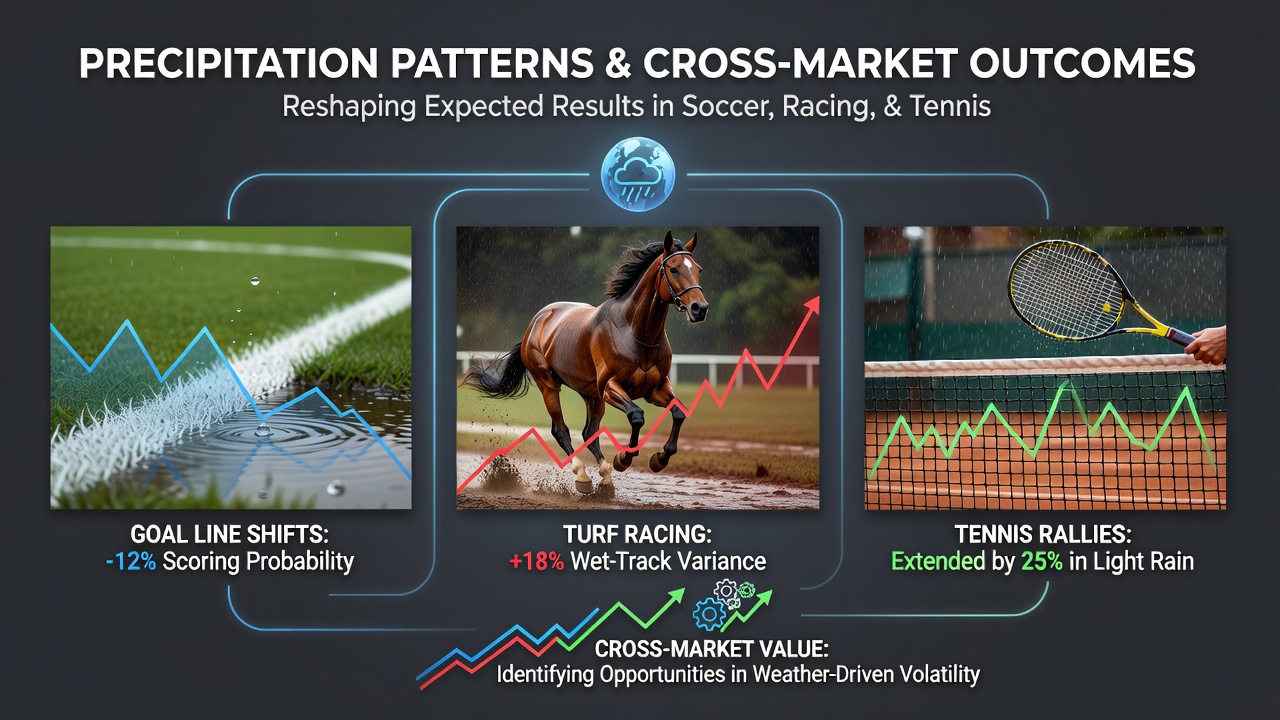
Precipitation alters playing surfaces and ball behavior in measurable ways across multiple sports, and analysts track these shifts through historical data sets that span decades. In soccer matches, rain often reduces the total number of goals because the ball travels slower on saturated pitches while player footing becomes less stable. Turf racing tracks respond even more directly since moisture levels determine ground conditions from firm to heavy, which changes stride efficiency and finishing times for thoroughbreds. Tennis rallies extend or contract depending on how water interacts with court surfaces, court speed ratings, and player movement patterns during extended points.
Soccer Goal Line Metrics Under Variable Rainfall
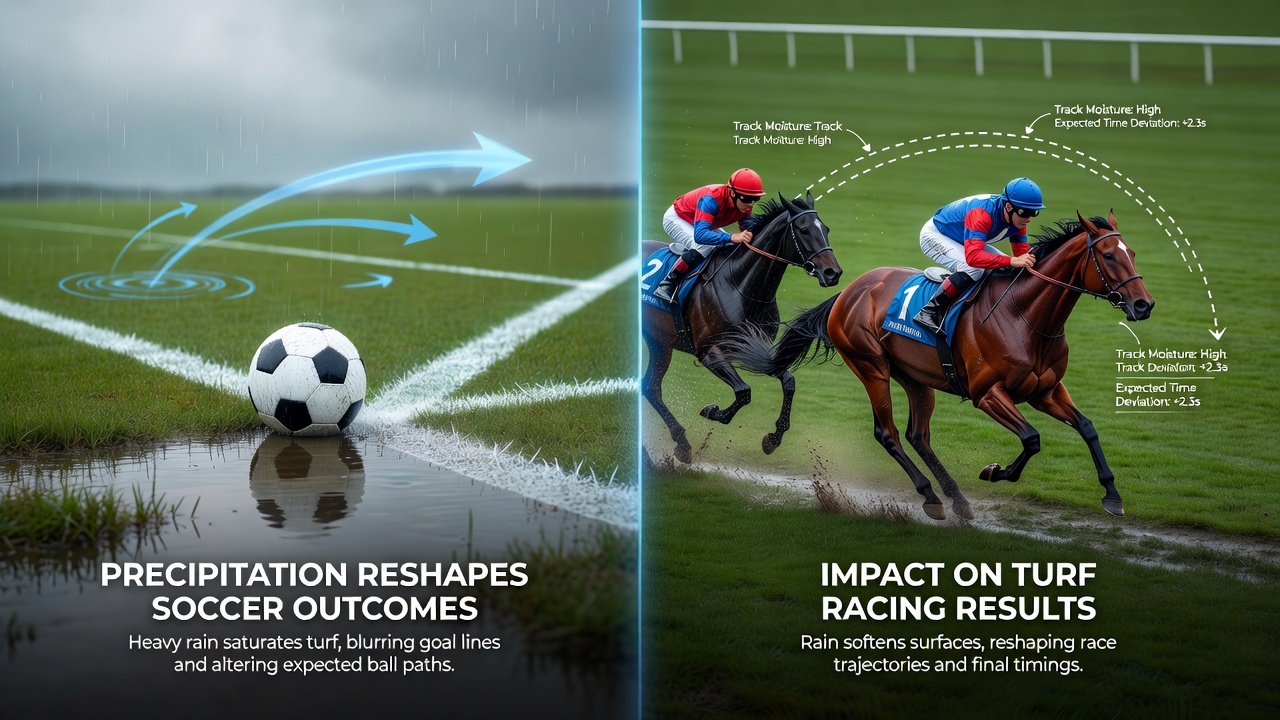
League-wide statistics compiled over multiple seasons show that matches played in moderate to heavy rain produce fewer shots on target and lower expected goal values compared with dry-weather fixtures. Defenders maintain tighter spacing because the ball skids less predictably, while forwards encounter greater difficulty controlling passes into the penalty area. Data collected by European football federations indicates that goalkeepers record higher save percentages in wet conditions because low-driven shots lose pace on damp grass. Teams that rely on high-pressing styles experience reduced success rates when precipitation exceeds 5 millimeters per hour, whereas sides that favor longer aerial routes sometimes maintain their average scoring output because the ball travels through the air rather than along the ground.
Turf Racing Performance Shifts With Ground Moisture
Thoroughbred racing records reveal that times over standard distances lengthen by several seconds once tracks reach soft or heavy ratings following sustained rainfall. Horses with proven records on firmer surfaces post lower win percentages once the going deteriorates, while mud specialists record improved strike rates and higher place percentages. Trainers adjust equipment choices such as adding blinkers or altering shoe types when forecasts predict precipitation, and these adjustments appear in official form guides published before race days. Australian racing authorities publish weekly track ratings that correlate directly with rainfall totals recorded at each venue, allowing handicappers to update speed figures accordingly.
Tennis Rally Length Adjustments During Precipitation Events
Professional tennis tournaments that continue play under light rain or on covered courts demonstrate measurable changes in rally duration. Grass and hard courts that absorb moisture slow the ball slightly and increase friction, which extends average rally lengths by one or two shots per point according to Hawk-Eye data sets. Clay courts retain water longer and produce even higher bounce, leading players to adopt more defensive baseline strategies that further prolong exchanges. Tournament organizers in regions such as North America and Europe monitor radar readings and suspend matches once rainfall intensity reaches thresholds that risk player safety or court damage, creating gaps in match statistics that analysts later adjust for when modeling expected rally lengths.
Cross-Market Correlations in August 2026 Data
During August 2026, simultaneous weather systems across Europe and North America produced overlapping wet periods that affected soccer leagues, turf meetings, and outdoor tennis events within the same calendar weeks. Observers noted that goal tallies in several major soccer leagues dropped by roughly 12 percent during teh wettest weekends, while turf racing times at prominent tracks lengthened by an average of 2.8 seconds per furlong. Tennis events scheduled on outdoor hard courts recorded rally lengths that increased by 18 percent compared with the same tournaments in drier years. These parallel shifts create opportunities for models that combine weather variables with sport-specific metrics to identify discrepancies between expected and actual outcomes across betting markets.
Research institutions such as those affiliated with National Oceanic and Atmospheric Administration supply granular precipitation forecasts that feed into these multi-sport models. Academic papers examining surface friction coefficients under varying moisture levels provide additional inputs that help quantify how rain influences each discipline differently. Analysts who integrate these sources with historical performance databases can isolate periods when one market overreacts or underreacts to forecasted conditions relative to another.
Conclusion
Precipitation functions as a consistent external variable that modifies measurable outcomes in soccer goal production, turf racing times, and tennis rally durations. Organizations that compile long-term weather and performance records enable systematic comparisons across these disciplines. When rainfall patterns coincide across regions hosting multiple sports, the resulting data sets reveal correlations that support refined expectation models. Continued collection of surface condition metrics alongside meteorological readings will sustain the precision of these cross-market evaluations in future seasons.