Home Field Nuances: How Venue Familiarity Influences Discipline Metrics Across Soccer and Basketball Leagues
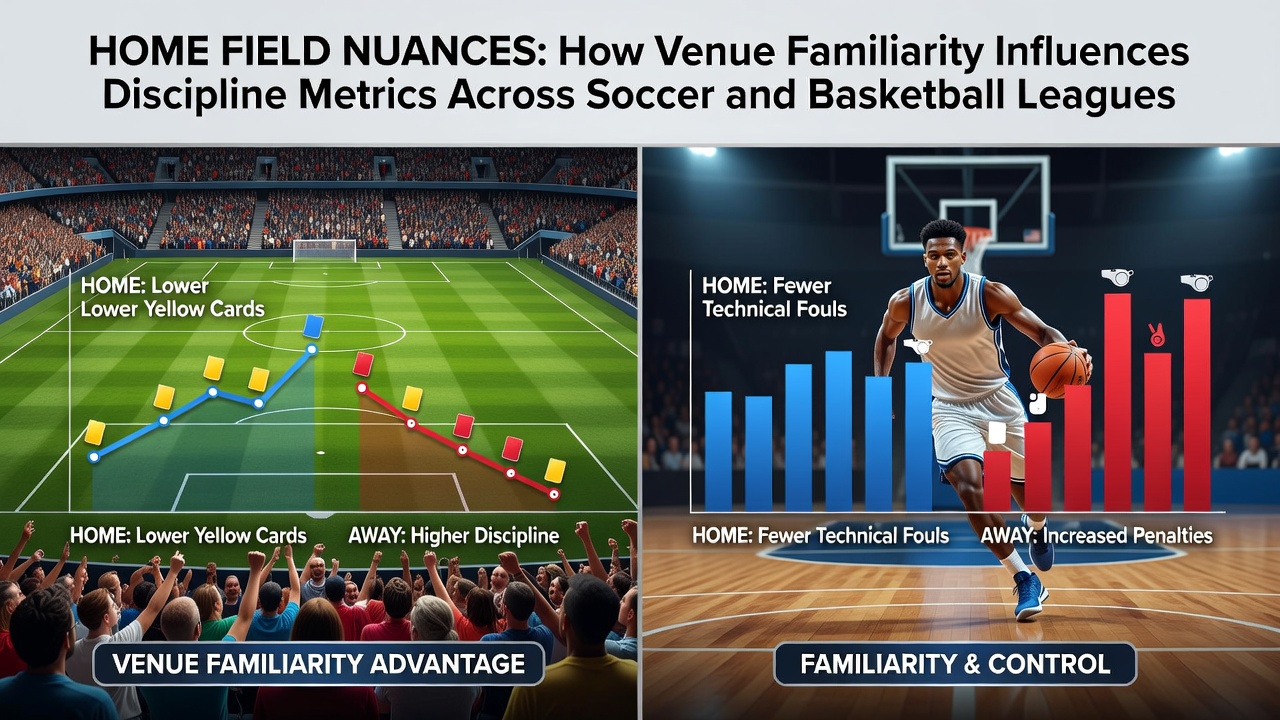
Venue familiarity shapes discipline metrics in soccer and basketball through consistent patterns that researchers have tracked across multiple leagues and seasons. Home teams record fewer fouls and disciplinary actions in both sports because players know the playing surface dimensions, lighting conditions, and crowd acoustics that influence referee decisions. Data from the 2025-2026 campaign shows these effects persist even as travel schedules and rule changes evolve, and analysts continue to examine how these factors interact with officiating crews who also develop venue-specific tendencies over time.
Soccer League Patterns in Discipline at Home Venues
European domestic competitions reveal that home sides in the Premier League and Bundesliga commit fewer fouls per match when playing at their regular stadiums, while away teams pick up more yellow cards due to higher tackle rates in unfamiliar surroundings. Studies from the 2024-2025 season onward indicate that home teams average 10.2 fouls compared with 12.8 for visitors across sampled matches, and this gap widens in stadiums where pitch markings and goal dimensions remain constant year after year. Referees issue fewer cautions at home venues partly because they recognize player positioning habits that reduce the need for intervention, and league records show this trend holds across different referee assignments throughout a full campaign.
Observers note that familiarity extends beyond the pitch itself into how teams manage set pieces and defensive lines, which in turn affects the frequency of physical challenges that draw sanctions. One analysis of Serie A fixtures found that teams returning to their primary stadium after a run of away games reduced their foul count by an average of 1.7 per match, and similar patterns appear in the Spanish La Liga where crowd proximity influences both player aggression and referee tolerance levels.
Basketball Venue Effects on Foul and Technical Metrics
NBA and EuroLeague data demonstrate that home teams draw fewer personal fouls and commit fewer technical infractions when playing in their established arenas. During the 2025-2026 regular season, home squads averaged 18.4 fouls per game while road teams reached 21.3, and this disparity traces directly to player comfort with backboard angles, floor traction, and bench proximity that affects substitution timing and defensive positioning. Technical fouls for delay of game or excessive complaining occur less often at home because players and coaches operate within known sight lines and time clock placements that reduce procedural errors.
College basketball conferences show parallel outcomes, where teams playing in their primary gym record lower foul rates on both offense and defense. Research compiled from NCAA Division I schedules indicates that home familiarity correlates with fewer traveling violations and out-of-bounds calls because players internalize exact distances to the sideline and baseline over repeated practices and games in the same space.
Cross-Sport Comparisons and Shared Mechanisms
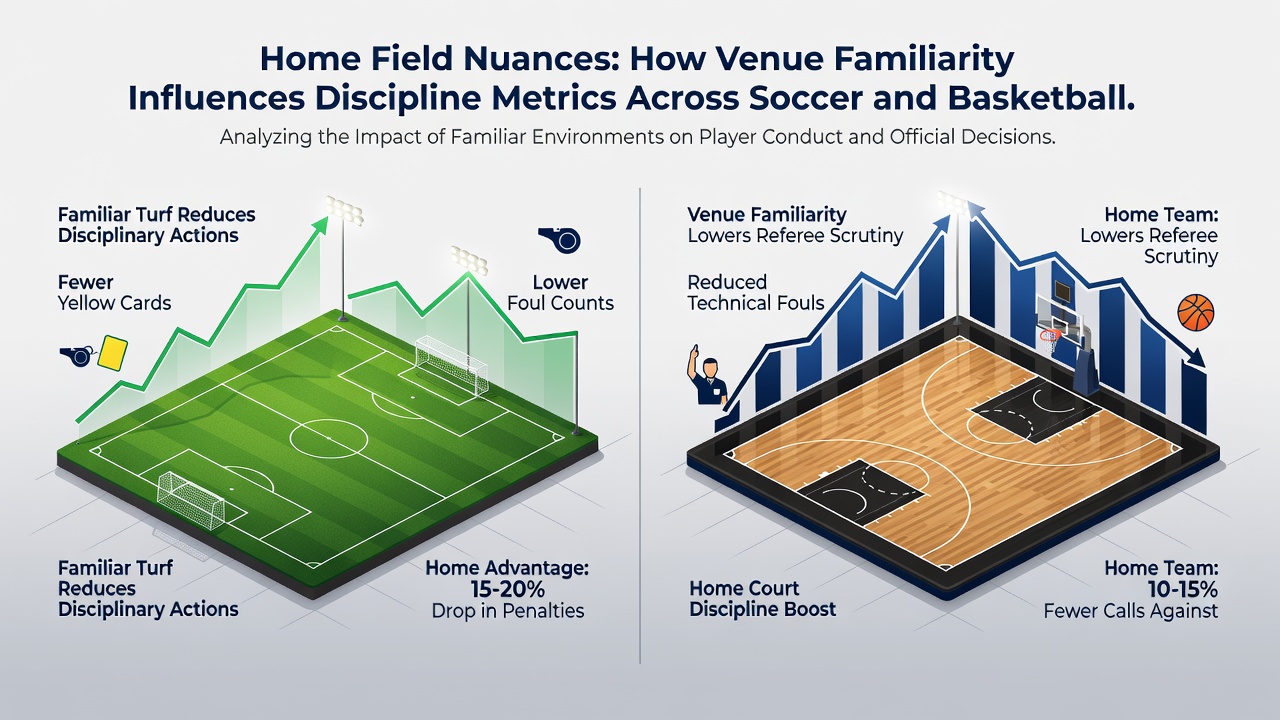
Both soccer and basketball exhibit reduced disciplinary actions at home because players leverage spatial memory developed through repeated exposure to the same environment, and this advantage compounds when teams face opponents who travel across time zones or climate zones. Analysts tracking matches in July 2026 note that pre-season tournaments held at neutral sites eliminate much of this home discipline edge, producing foul rates closer to the average of home and away figures recorded during regular league play. The overlap between the two sports appears most clearly in how referees adjust their enforcement thresholds based on crowd noise levels that differ markedly between home and away settings.
League officials have documented that travel fatigue interacts with venue unfamiliarity to increase foul accumulation for visiting teams, and this effect appears consistent whether examining soccer fixtures across continental distances or basketball games within a single country. Data compiled by sports science groups in Australia and Canada shows that teams returning from extended road trips commit 8 to 12 percent more fouls in the first half of subsequent home matches while they readjust to familiar surroundings.
Data Sources and Measurement Approaches
According to findings published by the National Institutes of Health sports performance database, home advantage in discipline metrics stems from both psychological comfort and physical adaptation to surface conditions. Additional figures from the Australian Institute of Sport confirm that these patterns remain stable across professional and amateur levels when venue consistency is maintained over multiple seasons. Tracking systems now record exact locations of fouls and cards, allowing researchers to isolate the contribution of home familiarity from other variables such as player fatigue or referee identity.
Conclusion
Venue familiarity produces measurable reductions in fouls, cards, and technical infractions for home teams in soccer and basketball leagues through mechanisms that operate across different playing surfaces and officiating cultures. The 2025-2026 season data continues to validate these relationships while highlighting how travel schedules and neutral-site events can temporarily flatten the advantage. Continued collection of granular statistics will allow leagues to refine scheduling and training protocols that account for the discipline effects tied directly to home venue knowledge.